When you continue strength training, you gradually become able to lift heavier weights, and the body you see in the mirror begins to change.
These changes are one of the joys of continuing strength training.
On the other hand, you may sometimes have questions like these.
Is my strength training really leading to results?
Was the reason I couldn’t lift as much as last week because my strength declined, or was it due to fatigue or lack of sleep?
As a physician involved in emergency and intensive care, I am in a position to look at various biological data every day.
In clinical practice, you cannot make judgments based solely on heart rate, blood pressure, or blood test results. What is important is to understand what you are measuring and the circumstances under which those numbers were obtained.
Couldn’t this way of thinking be applied to building my own body?
I started thinking about things like that.
I currently use wearable devices such as the Oura Ring and Suunto.
In this article, I would like to organize what should be measured to scientifically record strength training based on research, and then consider how useful wearable devices really are, using the Oura Ring data I have actually accumulated.
1. To begin with, what does it mean to scientifically record strength training?
When people hear about recording strength training, I think many imagine taking notes on the weights used and the number of repetitions.
Of course, that is important.
However, to scientifically evaluate strength training, at least two perspectives are required.
1. What kind of training was performed?
2. As a result, what kind of changes occurred in the body?
These two things may seem similar, but they are different.
For example, suppose you performed 3 sets of 10 repetitions of bench press at 80kg.
This represents the content of the training performed.
On the other hand, if you could previously only do 8 reps with 80kg, but can now do 10 reps under the same conditions, that is a clue indicating an improvement in performance.
However, an increase in the number of repetitions does not necessarily mean muscle hypertrophy. This is because familiarity with the movement, form, and fatigue levels also have an impact.
What kind of indicators are used in research?
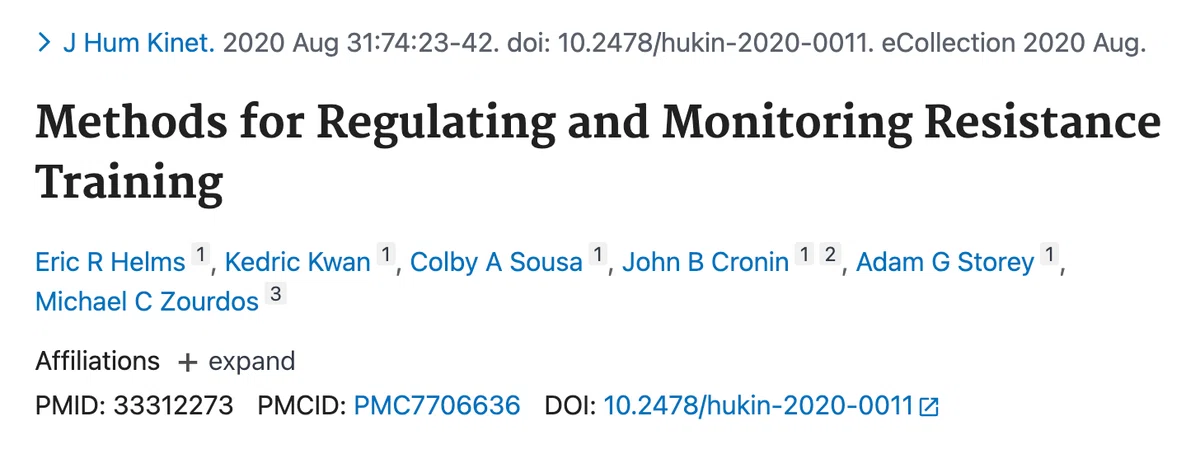
In the 2020 review paper “Methods for Regulating and Monitoring Resistance Training” published by Helms et al., methods for monitoring and adjusting the load of strength training were organized based on 90 studies.
In it, multiple indicators such as performance measurement, subjective effort, and evaluation of recovery status are examined.
Furthermore, in a meta-analysis and meta-regression of 67 studies and 2,058 people published by Pelland et al. in 2026, the relationship between weekly sets and frequency with muscle strength and hypertrophy was analyzed.
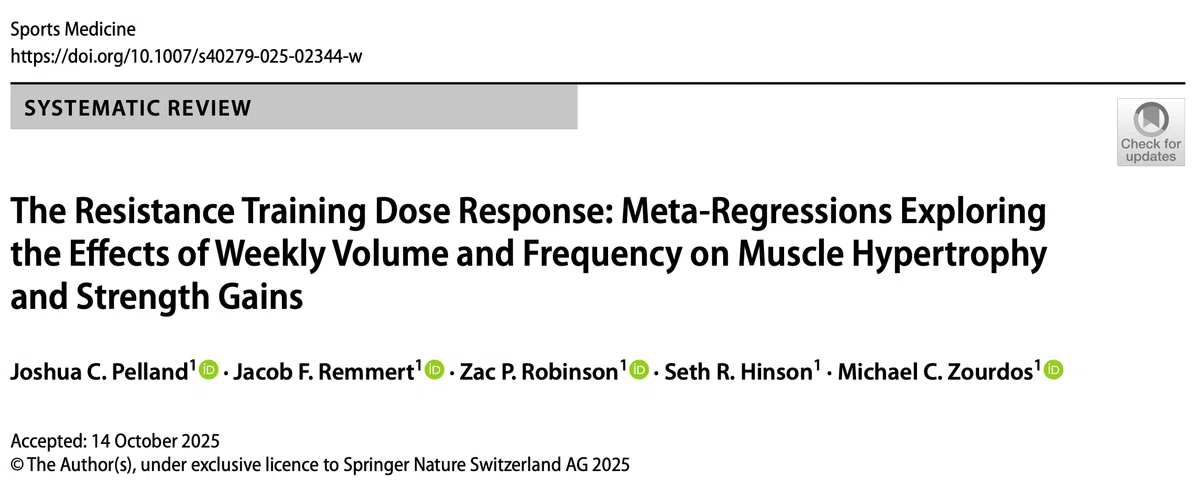
An increase in weekly sets was associated with improvements in muscle strength and hypertrophy, but the effects did not increase at the same rate the more you added.
Considering these results, when looking back at strength training scientifically, it may be obvious, but “how many times you went to the gym this week” is not enough.
How many sets were performed for each muscle group, what weight was used, how many repetitions were done, and what was the level of effort.
By recording these details, you will be able to evaluate your training more concretely than before.
2. If you want to measure the results of strength training, what should you record?
First, you want to record the following items.
-
Weight used, number of repetitions, and number of sets: Understand the training content
-
Weekly sets: Review the training volume for each muscle group
-
RIR (Repetitions in Reserve): Record the subjective reserve capacity of how many more reps you could have done
-
Muscle strength and repetition performance under constant conditions: Compare continuous changes
I think the point of “comparing under the same conditions” is particularly important.
In 2020, Grgic et al. published a systematic review of 32 studies and 1,595 people on the reproducibility of 1RM (the maximum weight that can be lifted only once) used for muscle strength evaluation.
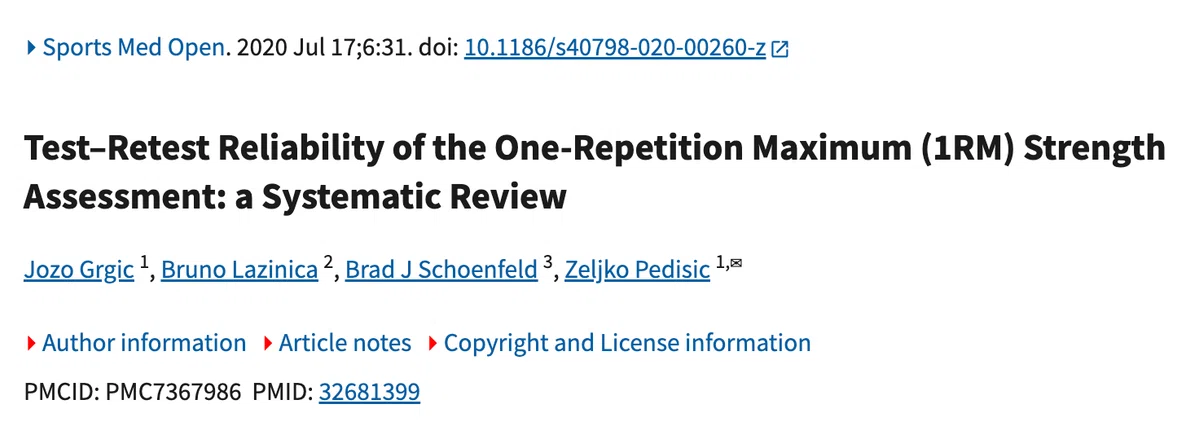
As a result, the median ICC (intraclass correlation coefficient) was high at 0.97, and the median coefficient of variation was 4.2%. In other words, the results were stable across repeated measurements, and the variation due to measurement error was relatively small.
1RM can be a highly reproducible method for assessing strength if performed under appropriate conditions.
On the other hand, there is a certain degree of variation in the measured values.
Therefore, it is not appropriate to judge whether ‘strength has increased’ or ‘decreased’ based on a single measurement.
Also, there is no need to measure 1RM every week during daily training.
I personally believe that a realistic approach is to record the weight and number of repetitions for the same exercise, using the same form and range of motion, under conditions as similar as possible, and to monitor the trends.
Up to this point, strength training records have been organized to a certain extent.
So, what can wearable devices add to these records?
3. What can the Oura Ring tell us?
With the Oura Ring I use daily, I can mainly check the following information.
Sleep duration, sleep timing, nocturnal resting heart rate, HRV (heart rate variability), etc.
These indicators do not directly measure muscle size or the weight lifted.
However, they may provide information to help understand the body’s condition on the day of strength training and the lifestyle before and after it.
For example, even if you train with the same weight, there are days when it feels easy and other days when it feels extremely difficult.
When considering those differences, trends in sleep duration and resting heart rate may provide clues.
However, an important question arises here.
To begin with, how accurate are the numbers displayed by the Oura Ring?
A meta-analysis validating Oura Ring sleep tracking
In 2025, Khan et al. published a systematic review and meta-analysis on Oura Ring sleep tracking, covering 6 studies and 388 participants.
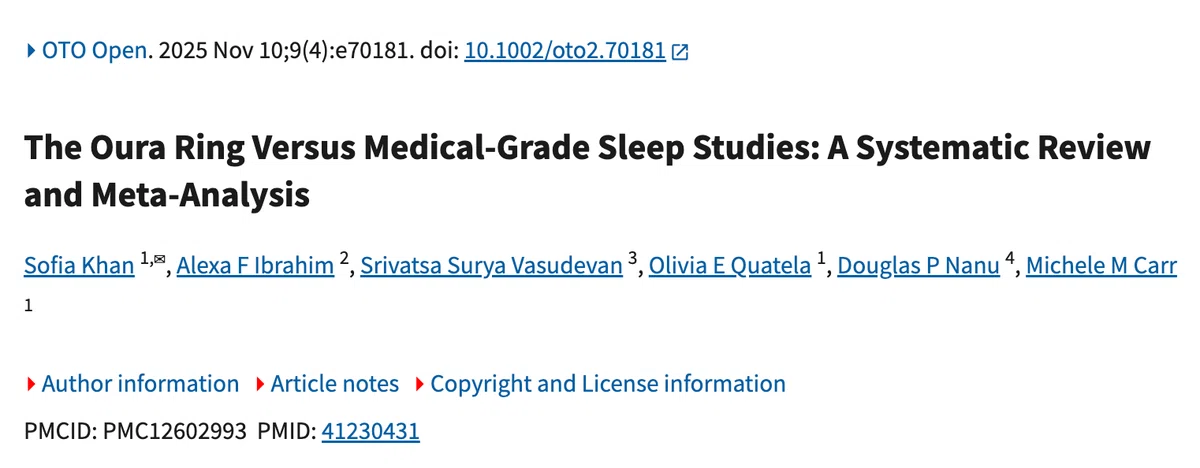
The comparison subjects were polysomnography (PSG) and actigraphy.
As one of the results, the mean difference in total sleep time was reported as follows.
Mean difference -2.97 minutes (95% confidence interval -10.27 to +4.33 minutes)
No statistically significant mean difference was observed.
Looking at these results, it seems that sleep time estimation by the Oura Ring shows relatively close values in terms of population averages.
However, even if the mean difference is small, it does not necessarily mean that the measurement error for individual nights is small.
Wearable data is useful as a reference, but it should not be treated as equivalent to medical examinations.
Rather than being swayed by minor changes in sleep stages or recovery scores, I believe there is value in observing trends in sleep duration measured by the same device and their relationship with lifestyle habits.
4. If we know HRV, can we also know muscle recovery?
One of the interesting metrics on the Oura Ring is HRV.
HRV (Heart Rate Variability) is an indicator that shows fluctuations in heart rate intervals and is related to autonomic nervous system activity.
It is influenced by various factors such as sleep, exercise, psychological stress, and physical condition.
What I want to note here is that HRV does not measure muscle recovery itself.
Just because HRV is low does not necessarily mean that muscle strength has decreased.
Conversely, just because HRV is high does not mean you can judge that your muscles have fully recovered.
I want to use HRV as an auxiliary indicator to observe the body’s reactions, rather than as an absolute standard for deciding whether or not to train.
In particular, my work in emergency and intensive care involves night shifts and irregular hours.
“How do HRV and sleep duration change after a night shift?”
“On days when sleep duration is short, do I feel the same training is more strenuous than usual?”
I have these questions.
By using the Oura Ring, I might be able to gradually record aspects that I have previously only been able to grasp through intuition.
Of course, until I actually measure and verify it, it remains just a hypothesis.
5. Can wearables replace strength training logs?
Thinking this far, the limitations of wearable devices also become apparent.
In 2025, Brennan et al. published a systematic review on research into the automatic identification of strength training exercises using technology such as sensors.
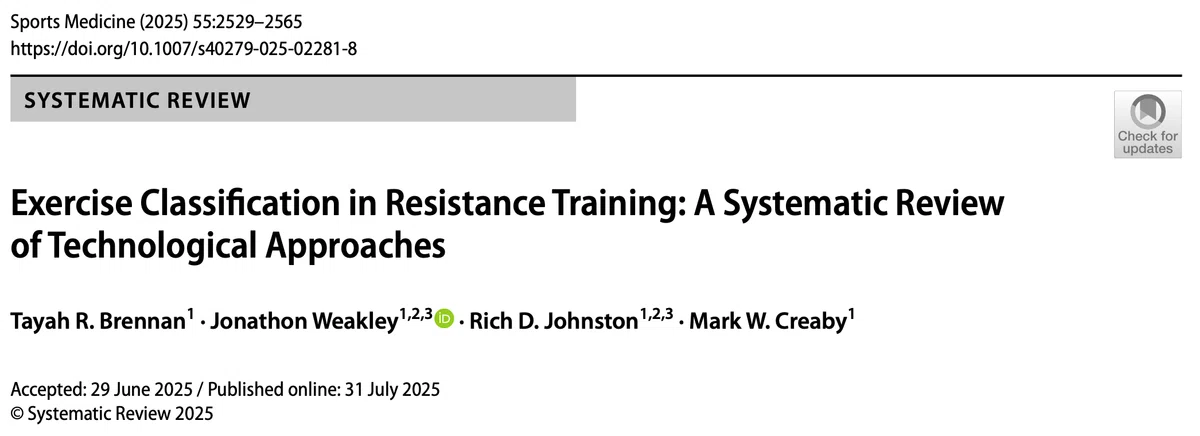
While there is potential in technology that uses wearables and sensors to estimate exercise content, challenges remain, such as variations in accuracy due to differences in exercises and experimental conditions.
Furthermore, being able to estimate the type of exercise is not the same as accurately grasping the weight, number of repetitions, and level of effort, which are important for muscle hypertrophy.
In other words, at this point in time, it cannot be said that wearable devices alone can comprehensively evaluate the results of strength training.
In my case, since I also use a Suunto, I can check activity data such as exercise duration and heart rate.
However, neither the Oura Ring nor the Suunto can replace a strength training log itself.
It is necessary to use the information that each excels at appropriately.
So, how can wearables actually be used?
From here on, I would like to consider this using my own data.
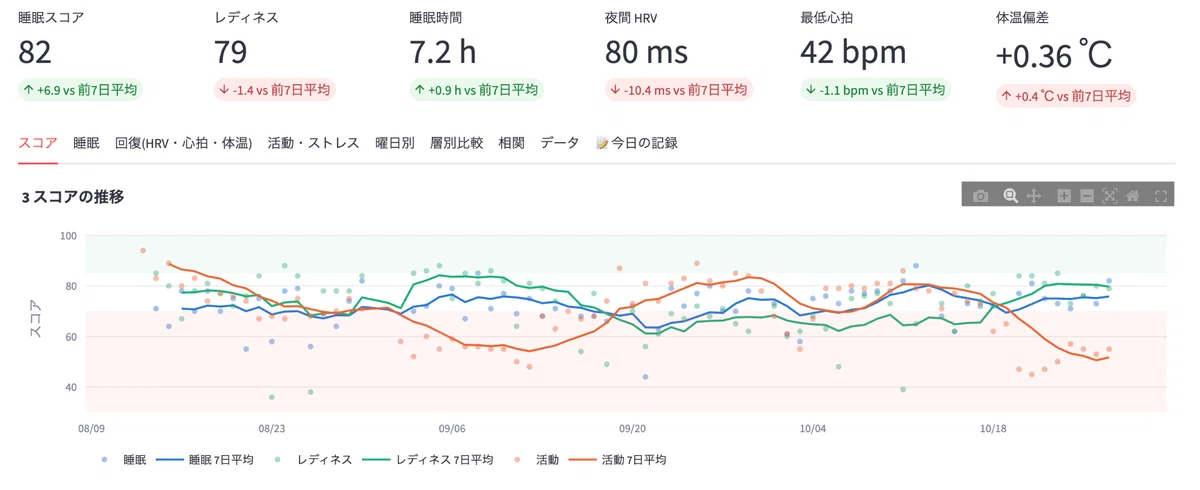
Currently, I have about 75 days of data acquired with the Oura Ring.
Of those, 10 mornings followed a day with an exercise record, and 65 mornings followed a day without an exercise record.
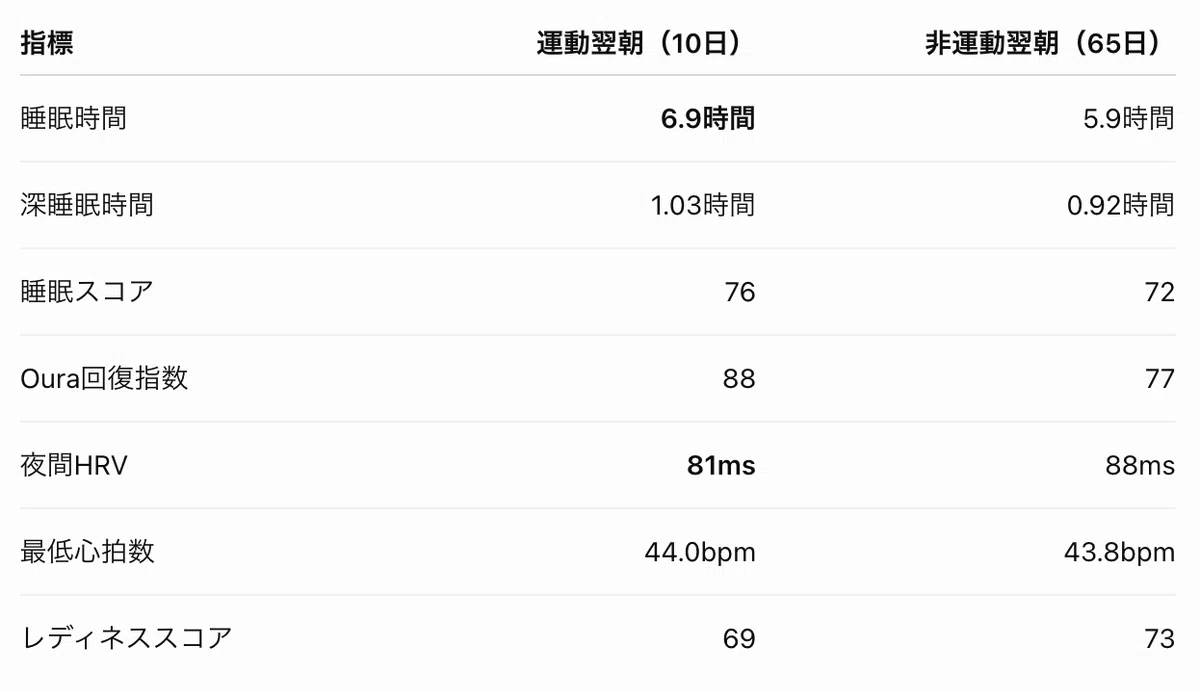
From this comparison, some interesting things emerge.
First, on mornings following an exercise record, compared to mornings without one, sleep duration was on average 1.0 hour longer, and the sleep score was 4 points higher.
On the other hand, nighttime HRV was 7ms lower on average, and the readiness score was 4 points lower.
In other words, in this record, the indicators related to sleep and the indicators related to Oura readiness did not necessarily change in the same direction.
However, it is premature to interpret this as ‘exercise improved sleep but delayed muscle recovery’.
It is possible that I was naturally more likely to secure sleep time on days I exercised. The content and intensity of exercise, work conditions, and physical condition also differ.
Also, it is not possible to diagnose muscle fatigue or lack of recovery based solely on a decrease in HRV.
Even so, just by combining the Oura numbers I used to look at casually with my exercise records, the number of questions I should consider has increased.
6. How I will record things from now on
Based on this analysis, I would like to record not only wearable data but also training content and my subjective state in the future.
What I especially want to record newly is subjective fatigue.
The HRV and readiness shown by Oura may not necessarily match the fatigue I actually feel.
For example, there may be days when my HRV is low but my body feels light, or days when training feels tough even if there is no major change in the numbers.
I will start by lining up my strength training records and Oura Ring data.
For example, I will look back at my training performance on days when my sleep time was short.
I will check what changes occurred in my resting heart rate and HRV during weeks when I had consecutive night shifts.
As a result, I might find some kind of correlation.
Conversely, it is also possible that almost no correlation will be found.
I think both results are meaningful.
However, I cannot prove causality from my own data alone. This is because many factors such as training content, diet, and physical condition change simultaneously.
The important thing is not to look for convenient results, but to understand your own body through recording.
Conclusion: Does the Oura Ring help in scientifically recording strength training?
My answer at this point is as follows.
The core of evaluating the results of strength training remains, above all, the record of training and changes in muscle strength and body composition.
On the other hand, the Oura Ring serves as a tool for continuously observing the background information, such as sleep, nocturnal resting heart rate, and HRV.
In other words, I believe that wearable devices are not so much for directly measuring the results of strength training, but rather for providing more material to consider why performance changed on a given day.
Research has clarified many things about strength training methods and measurement metrics.
However, how that applies to one’s own life is another matter entirely.
Using both the perspective of reading data as an emergency physician and the experience of having continued training.
While utilizing both, I will read research, keep my own records, and think through it myself.
I would like to make this a new initiative starting from now.
References
-
Helms ER, et al. Methods for Regulating and Monitoring Resistance Training. Journal of Human Kinetics. 2020.
https://doi.org/10.2478/hukin-2020-0011 -
Pelland JC, et al. The Resistance Training Dose Response: Meta-Regressions Exploring the Effects of Weekly Volume and Frequency on Muscle Hypertrophy and Strength Gains. Sports Medicine. 2026.
https://doi.org/10.1007/s40279-025-02344-w -
Grgic J, et al. Test–Retest Reliability of the One-Repetition Maximum (1RM) Strength Assessment: a Systematic Review. Sports Medicine – Open. 2020.
https://doi.org/10.1186/s40798-020-00260-z -
Khan S, et al. The Oura Ring Versus Medical-Grade Sleep Studies: A Systematic Review and Meta-Analysis. OTO Open. 2025.
https://doi.org/10.1002/oto2.70181 -
Brennan TR, et al. Exercise Classification in Resistance Training: A Systematic Review of Technological Approaches. Sports Medicine. 2025.
https://doi.org/10.1007/s40279-025-02281-8
*This article introduces research in medicine and exercise science and is not intended for the diagnosis of health conditions or treatment decisions using wearable devices. Personal records to be introduced in the future will be considered separately from effects proven by research.