Viral fitness trends are designed to grab your attention. They’re presented in a tidy, easy-to-understand format that promises tangible results: “Follow this simple formula and watch your fitness climb!”
While the payoff is often the biggest selling point, what’s actually important—and what will support your running performance—isn’t necessarily the workout itself, but something a little less obvious.
Here are a few hints to get you thinking about this shared crucial element:
- The 12-3-30 treadmill routine requires walking on a 12 percent incline at three miles per hour for 30 minutes, and the person who started it wanted a challenging workout, but one she could do frequently.
- The 3-2-8 challenge requires three strength training days and two low-impact Pilates or barre sessions per week, while racking up 8,000 steps every day, with the founder offering weeks-long programs.
- Finally, the 75 Hard challenge has a few health and fitness rules you need to follow for 75 days straight.
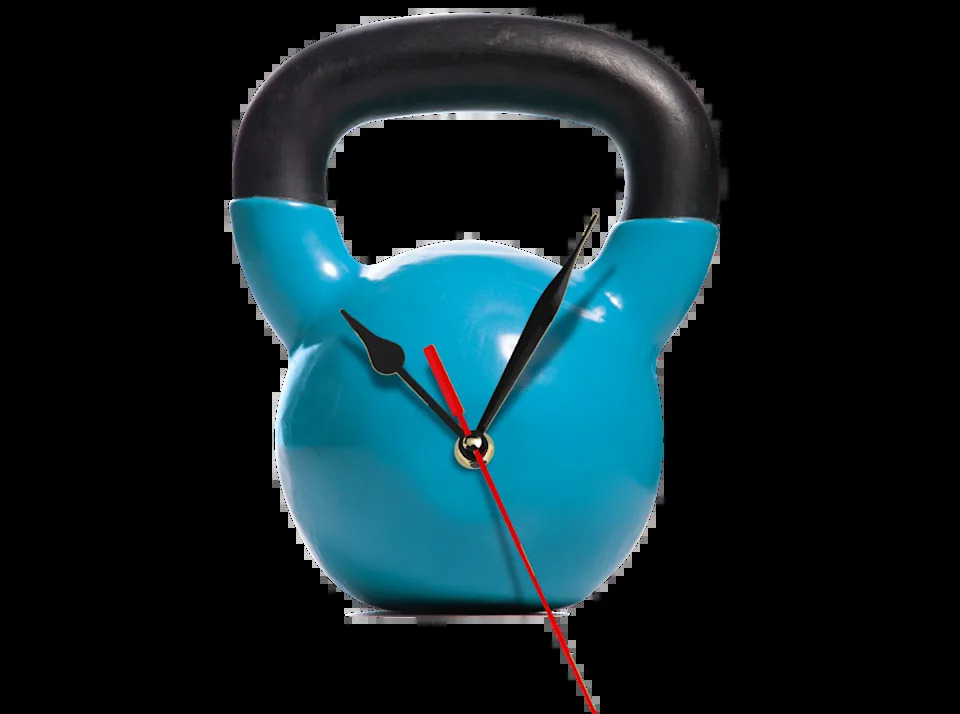
Yes, these all have numbers in the name and took off on social media. But the deeper commonality between these workout challenges—and every run training plan? Consistency.
Whether you’re looking to level up your strength or do a healthy lifestyle overhaul to support your running goals, here’s what you need to know before attempting any viral fitness challenge. Plus, how consistency helps you become a smarter, stronger, and more well-rounded athlete, no matter the workout you actually do.
Spoiler Alert: Most Exercise Trends Aren’t Revolutionary Workouts
A great majority of these viral trends use the element of consistency, not the intensity level or actual structure of the workout, to promise substantial gains.
It’s also what separates routines that actually help you build fitness from ones that get you nowhere, according to Atlanta-based exercise physiologist and run coach Janet Hamilton, CSCS, founder of Running Strong.
Hamilton sees people dive headfirst into these trends, go hard for a week or two, and then life gets in the way. A missed workout turns into a missed week. The routine fades, motivation drops, and whatever progress might have been building never really materializes.
“You can’t get better unless you go out there and do it,” Hamilton says.
It sounds obvious, but it’s the consistency of sticking with these training protocols that most often breaks down—and yet it’s the most important factor to achieve the promised results.
Hamilton sees the same type of thing happen all the time with runners she coaches. Training plans she creates specifically for individuals get thrown by the wayside, but the runners still expect fitness gains.
“[An athlete will] get one or two workouts done one week then skip a week because life got in the way, and then say ‘Gosh, why am I not improving?’” Hamilton says. “You have to look at the big picture view: How much have you really asked your body to improve?”
Inconsistency doesn’t just stall progress; it also increases your injury risk.
A big part of the appeal of viral workouts is intensity. They promise that if you work really hard you’ll get huge payoffs. It’s a fundamentally true statement, but when you only work out once every week or two, your body is unable to build on the stress you’re putting on it, Hamilton explains. You’re basically asking your muscles, tendons, and joints to handle loads they’re consistently unprepared to handle.
In other words, sporadic effort doesn’t send a strong enough signal to your body to actually get stronger, but it’s more than enough to hurt it.
Why Consistency Is King
To understand why consistency matters so much, it helps to zoom out and look at how your body changes with training in the first place.
At its core, fitness is a response to repeated stress, Hamilton explains. You challenge your body—through walking, running, lifting, or any other type of exercise—and it adapts over time to better handle that challenge.
That’s why one hard workout doesn’t move the needle much on its own. You might feel accomplished after a tough effort, but the deeper physiological changes take time and repetition.
How long does it take to see these adaptations? “Well, how consistently are you exercising?” Hamilton asks.
In general, statistically significant changes tend to show up over the course of several weeks—often in the six- to 12-week range—of consistent exercise, Hamilton explains. However, different systems in your body adapt at different speeds, so the actual feeling that you’re gaining fitness shows up differently. For example, your musculoskeletal system takes longer to get stronger, while your cardiovascular system adapts relatively quickly, Hamilton says.
Progress tends to show up in small, almost imperceptible ways at first, Hamilton continues. Recovering quicker between workouts, training paces becoming easier to maintain, or simply finishing a workout that you thought was out of reach indicate you’re getting stronger.
At the end of the day, you’re not going to wake up dramatically fitter after a single workout—or even a single week, and that’s why consistency is so crucial.
How to Build a Consistent Routine
Diving headfirst into a demanding challenge without an established routine first is a recipe for disaster, and as Hamilton mentioned above, could result in quick burnout or injury.
The good news is building a consistent routine isn’t complicated.
For general health, the American College of Sports Medicine (ACSM) recommends 150 minutes of moderate-intensity exercise per week. (If you’re already running regularly, you may be hitting this mark!) It translates to five 30-minute easy runs per week, or four 40-minute sessions. That’s how simple it starts.
“You can break up those minutes however you like and get similar benefits,” Hamilton says.
The ACSM also recommends at least two days per week of resistance training for muscular strength and endurance. It’s a simple structure: Combine consistent aerobic training with a couple days of strength work to become a stronger, more well-rounded athlete.
However, “if you do the same exact thing day after day, your improvement will actually plateau,” Hamilton says. Enter: higher-intensity efforts.
For runners, a strong aerobic base forms the foundation of your training, but consistently adding two quality workouts per week (one lactate threshold or VO₂ max workout and one long run, for example), in addition to your easy running and strength training drives race-specific fitness.
That’s why many structured plans—whether for running performance or for general fitness—blend intensities and build volume gradually over time. Consistency creates the environment for adaptation to occur, and adding variation on top of a strong baseline gives your body new reasons to keep improving.
More often than not, the biggest positive changes in your fitness come from finding a simple routine that realistically fits with your schedule, and repeating it often enough to give your body the opportunity to adapt.
Matt Rudisill is an Associate Service Editor with the Hearst Enthusiast Group. A Nittany Lion through-and-through, Matt graduated from PSU in 2022 with a degree in journalism and worked in communications for the university’s athletic department for the past three years as the main contact and photographer for its nationally-ranked cross country and track & field teams. Matt was also heavily involved in communications efforts for the Penn State football team’s 2024 College Football Playoff run as well as the Nittany Lion men’s basketball team’s 2023 NCAA Tournament appearance. In his role with Hearst’s Enthusiast Group, Matt contributes to both Runner’s World and Bicycling magazines, creating service content to benefit runners and cyclists of all ages. When he’s not out jogging, Matt can be found tweeting bad takes about the Phillies or watching movies.