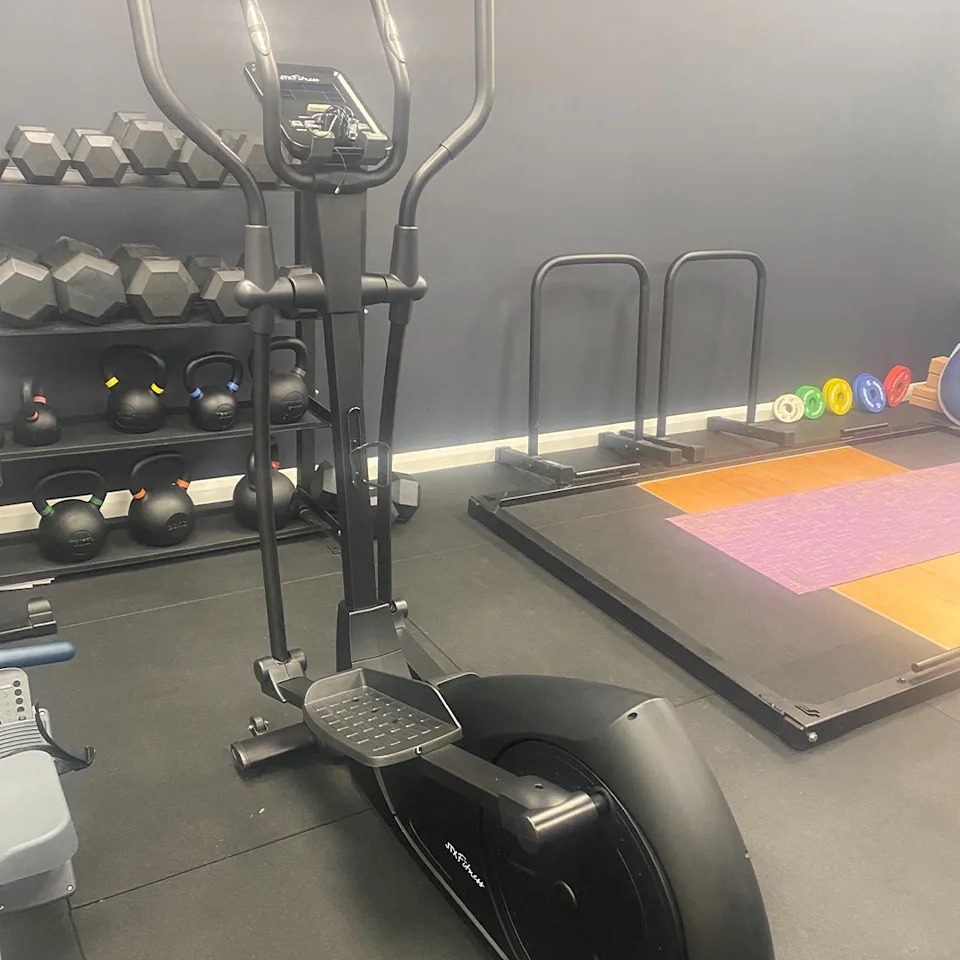
Investing in the best home workout equipment can revolutionise your fitness routine. You don’t need to schlep to the gym after work or worry about the unpredictable British weather – you can simply roll out of bed and squeeze in 20 minutes before getting on with your day.
If you want a full body workout, we recommend considering one of our experts’ best cross trainers. This underrated piece of kit provides an effective, full-body workout that’s low impact and not too taxing on your joints.
“The cross trainer allows you to work the upper and lower body simultaneously,” says Anne Chinoy, personal trainer, Athletics England qualified running coach and Active IQ ambassador. “It has two foot plates and two handlebars, which you push and pull as your legs move back and forth, delivering a full-body cardio workout.”
The best cross trainers for 2026
To help you find your new at-home fitness buddy, our Good Housekeeping Institute fitness pros put a range of cross trainer machines through their paces in our state-of-the-art gym. You’ll find a full breakdown of our rigorous testing below.
And if our tried and tested options are out of your price range, don’t panic, as our editors have also highlighted some of their favourite budget-friendly models in our editors’ picks section, starting from under £200.
How we test cross trainers
Our Good Housekeeping Institute experts trialled the top cross trainers on the market, judging them on clarity of instructions, ease of use, design and, most importantly, performance.
They considered how easy the machines were to set up and whether they took up significant floor space. Over a range of workouts, they considered how smooth and stable they were, whether adjusting the resistance was a faff-free process and how versatile they were for workouts. They also assessed any extra features to see if they’re worth it.
Overall scores were awarded, with only the elliptical cross trainers that met our exacting standards receiving the GHI Approved seal of approval.
The remaining products below have been hand-picked by our fitness editors, who have all used workout machines extensively.

Hearst Owned
JTX Tri-Fit Incline Cross Trainer
Score: 95/100
JTX has a track record for building serious gym equipment, and this cross trainer didn’t disappoint. It offers 16 levels of resistance, 18 workout programmes and an adjustable incline, so you can get in a solid workout whether you’re a total newbie or a seasoned athlete.
The robust design was a big hit with our experts, who said it felt extremely stable at all levels and speeds. They also praised its adjustable features (handle height, stride length and footplate position), which make it a great all-rounder for the whole family to use.
The computer is quite basic, but it’s a doddle to use and clearly displays all the data you need to keep tabs on your progress. On top of all that, the machine is surprisingly quiet and easy to store away post-workout thanks to the nifty transport wheels.
There’s also Bluetooth connectivity and a tablet holder, so you can connect to your favourite apps or just watch TV while you sweat. It lost some points for inaccurate heart rate data and our petite testers found the vertical handlebars a bit awkward to reach, but overall, it’s an impressive bit of kit and, as you can see from our scoring, a standout performer on test.

Technogym Elliptical Foldable Cross Trainer
Score: 90/100
One of the best things about this premium Technogym model is that you don’t have to faff around with screws and bolts – installation is included with your purchase. The team that delivers your new cross trainer also provides a tutorial and will help you get set up on the app, so you can start working out straight away. The design is also compact and foldable, making it a smart choice if you’re short on space.
Our tester found it a pleasure to use, praising the simple display for monitoring your progress and the extensive Technogym app, which gives you access to a variety of set workouts to help you reach your goals. They also rated the mix of handlebars – there are two moving ones to target the arms and a central handle for focusing on the lower body – and the conveniently placed water bottle holder for sipping when things get sweaty. With 25 levels of resistance to play with, there’s something to suit all experience levels, too.
Unlike some of the other ellipticals we’ve tested, you can’t change the resistance at the touch of a button – you have to manually push the lever to reach your desired setting. That aside, it’s a top-spec machine.

BowFlex Max Trainer Total 40
Score: 90/100
Bowflex is a well-known name when it comes to gym equipment – providing robust, durable treadmills and rowing machines. This cross trainer is no different, and although it would be an investment, our expert liked the sturdy build and the smooth, quiet motion, even when they were pushing through a tough class. With 20 resistance levels and six hand positions, it also provides an effective full-body workout.
You’ll need to set aside an hour to build it, but the process is straightforward thanks to a step-by-step video. It’s a heavy piece of equipment, so we advise finding a spot you’re happy with and keeping it there. Our expert found it easy to use too, with good-sized foot pedals, an easy-to-reach resistance dial and integrated heart rate hand grips. However, getting on the machine requires a step up and it takes some force to get it started, so it may not be suitable for those with mobility problems.
Despite its compact design, it also includes a 16-inch adjustable HD touchscreen, which is clear and easy to use – giving you key stats, including heart rate, RPM and calories burned. Bored with the standard cross training home workout? There’s an integrated JRNY app to keep things interesting. It starts from £11.99 and goes up to £19.99 a month, but it’s a standout feature, with thousands of on-demand classes, from recovery sessions to interval sessions.

JTX Fitness Zenith Rise
Score: 79/100
Looking for a gym-quality experience at home? This semi-commercial grade machine boasts a whopping 32 levels of electromagnetic resistance and 20 incline levels, so you can keep challenging yourself as you get fitter. It has a 17-inch touchscreen console, which connects to workout apps like Kinomap as well as entertainment platforms like Netflix, YouTube and Spotify, so you can listen to your favourite music or just catch up on TV while you exercise. There’s also a range of workout programmes to keep you motivated, from intervals to scenic sessions in picturesque forests.
Our expert said the set-up process was straightforward (it does require two people due to the heavy build) and they praised the robust design, which has two sets or ergonomic handlebars, wide footplates and a long stride length to suit most bodies. It provided an extremely smooth and stable ride, and there are built-in heart rate monitors plus the option to connect your own device.
The buttons could have been a bit more responsive – they required a double press at times – and our tester had some issues with changing the volume during workouts. These are relatively small issues for another otherwise impressive piece of kit, though.

JTX Pace-F6: Folding Cross Trainer
Score: 78/100
If you’re short on space and after something that won’t take over your entire home gym/corner of your living room, this JTX pick, which can be partially folded, is a good shout. It also features built-in wheels, so you can cart it around the house. Just note – folding it away and transporting it is probably a two-person job.
Our expert found the set-up instructions and diagrams a little confusing to follow but, once built, the design felt robust, and the machine was a pleasure to use. Though there are no pre-set sessions, you can connect to the Kinomap training app and the Pace-F6 provides 15 levels of resistance. According to our tester, even the lower levels provide a challenging workout, so you’re sure to see improvements to your fitness after consistent use. It may not be the right choice if you’re a total beginner, though.
The console is a good size, with all the post-workout stats you need (time, speed, RPM and distance and heart rate) to track your progress. What’s more, it’s self-powered so you can train anywhere in the house, without an unsightly extension cable running across the room.
The 10kg flywheel offer a smooth elliptical experience and the 18-inch stride length should accommodate most heights and abilities, however our petite tester found they had to stretch across when manoeuvring the handles. There is a water bottle holder, but it’s positioned below the gear controls which means there’s only room for a small one.

JTX Strider-X8
Score: 71/100
JTX is a market leader for a reason (hence why we have so many on our list!). This model is a little cheaper than others here, but still offers an impressive range of features, including 16 levels of resistance, 18 built-in workout programmes and Bluetooth connectivity, so you can connect to your training apps like Kinomap for a more interactive experience.
Our pro was impressed with how easy the machine was to set up. The instructions were clear, the process wasn’t fiddly, and it was ready to use in a matter of minutes. It’s also an excellent choice if you don’t have heaps of space – the machine is compact, so you can tuck it away in the corner without attracting unwanted attention.
Once up and running, it’s intuitive to use, with a clear, computer console that reveals all your in- and post-workout data, including distance, time, speed and pulse rate. It’s also extremely quiet, so you don’t have to worry about disturbing the rest of the family during your early morning workouts.
According to JTX, the max height is 5’9, so look to one of our other options if you’re on the taller side.

Editors’ picks

Hearst Owned
Neezee Elliptical Cross Trainer
Don’t fancy splashing out on a top-spec cross trainer? This no-frills option from Neezee is a good choice. Not just a cross trainer, this clever piece of kit doubles up as an exercise bike, so you can enjoy a spot of at-home spinning as well.
The padded seat is comfortable and fully adjustable, the well-placed adjustment knob allows you to tinker with the resistance level and there are built-in heart rate sensors and a neat LCD screen to help you keep track of your progress.
As a bonus, this Neezee option comes with wheels, allowing you to move it around the house easily or stash it in the garage when you need the spare bedroom back.

Dripex Cross Trainer
This simple Dripex design is a good buy if you’re on a budget. It has a 6kg flywheel for smooth movements and offers levels of magnetic resistance to suit all members of the family. It also claims to be whisper-quiet, so you can work out without disturbing those around you.
It has a classic LDC monitor so you can keep an eye on your progress, built-in heart rate sensors on the handlebars and an anti-slip surface so you can focus on your session in peace.
If you don’t want the hassle of having to put the machine together yourself, you can pay extra for assembly, too.

Domyos Self-Powered Cross Trainer EL540
Unlike most cross trainers, which need to be set up near a plug socket, this Domyos machine is self-powered, so you can exercise in your kitchen, garage or even in the garden on a sunny day. It also won’t guzzle lots of energy and there won’t be any trailing wires making a mess. Hurrah!
It offers a wide range of resistance levels (15 to be exact), 24 pre-set programmes for all abilities, plus the option to sync up with your favourite fitness app via the smart console. Here, you can also review your distance, speed, calories heart rate and cadence.
The 9kg flywheel makes for a smooth, quiet riding experience, the petite machine should be easy enough to move around and there’s a safety mechanism for children. For peace of mind when investing, it comes with a two-year warranty.

Opti 2-in1 Air Cross Trainer and Exercise Bike
Another two-in-one cross trainer and exercise bike combo, this sleek Opti elliptical is a top choice if you’re on a budget or you don’t have space for both pieces of kit in your home.
The simple machine has everything you need to work up a sweat. The seat and handlebars are adjustable to suit all heights and sizes, there’s a small screen for viewing your data, plus a simple dial to increase the tension and wheels for easy transportation.
Granted, it’s not the sturdiest option on the market, but at this price, it’s hard to complain. It also comes with a one-year warranty.

Why trust the Good Housekeeping Institute?
We’ve been testing products at the Good Housekeeping Institute for over 100 years. In that time, we’ve learnt a lot about what makes a great piece of exercise equipment for your home. We’ve also developed rigorous protocols to ensure everything we recommend to you will live up to its claims.
Kim Hawley, our senior sleep and wellness tester, and Priyankaa Joshi, our sleep and wellness editor, have reviewed and written about hundreds of products, so they know exactly what they’re look for, whether it’s the best greens powders, the best walking poles or the best yoga mats.
Kim is a level 4 qualified personal trainer with over 20 years’ experience working in leading health clubs across the UK. Priyankaa is an avid gym-goer and runner, and is currently undertaking her level 2 personal training qualification.

Hearst Owned
What’s the difference between a cross trainer and an elliptical?
According to personal trainer Anne Chinoy, the terms ‘cross trainer’ and ‘elliptical’ are often used interchangeably, but cross trainers are a particular type of elliptical machine.
“While standard elliptical machines have fixed arms and only target the lower body, the cross trainer stands out for its moveable handles,” she says.
Are cross trainers worth it?
That’s a resounding yes. According to Chinoy, it’s one of the most versatile machines out there. Here, she breaks down some of the main benefits.
Low impact: Unlike running on a treadmill, a cross trainer doesn’t tax your joints, as your feet stay in contact with the plates at all times. So, you can work on your cardiovascular fitness without putting your muscles and joints under stress. There’s also less risk of injury, and it’s suitable for all ages and fitness levels.
Cardiovascular benefits: Despite the reduced load, don’t be deceived – the cross trainer still offers an effective cardiovascular workout. “You can still achieve all the benefits of running, such as increased lung capacity, heart strength, reduced blood pressure and weight loss,” points out Chinoy.
Versatile: The cross trainer allows you to work out at the intensity that’s right for you. You can opt for an easy, continuous pace to develop your aerobic capacity, or try challenging interval sessions that will really boost your fitness.
Unobtrusive: The cross trainer is one of the quietest bits of kit available and it generally has a smaller footprint than a treadmill or rowing machine, making it a good choice if you don’t have your own dedicated home gym.
What is the correct way to use a cross trainer?
It’s important that you maintain the correct form for safety and to get the most out of your workout. Here are Chinoy’s top tips.
-
Stand tall (imagine a piece of string pulling you up from the crown of your head towards the ceiling) and look out in front of you.
-
Keep your shoulders relaxed and ensure your feet stay in contact with the plate at all times.
-
Try to avoid lifting your heels as you pedal. Keep your knees and elbows relaxed and engage your core – thinking about pulling the belly button in towards the spine can help with this.
-
If you find your posture slackens, do a full body scan from head to toe every five minutes to check your form. You can then reset your body position as needed.
How to choose a cross trainer
There are so many different cross trainer machines on the market, and choosing the right machine can be overwhelming, which is why it’s important to think about more than just price. “The right machine should suit your fitness goals, height, home space, and how often you plan to use it,” explains Shinead Barret, Head of Operations at Johnson Fitness & Wellness. These are some factors you should consider.
Budget: “Lower-priced models are often ideal for light or occasional workouts, with shorter stride lengths, fewer options for resistance and louder operation, while higher-end machines are designed for more regular use, longer, smoother strides and longer-term durability,” she says. “If the whole family is planning on using the machine or you’re planning to train daily, investing more can significantly improve comfort, stability and the overall workout experience.”
Stride length: One of the most important factors when selecting a machine is the stride length, as it directly affects how natural and comfortable the movement feels. “As a general rule, shorter users should select a stride under 16”, a 16–18” stride is usually suitable for most users, and for anyone taller than average or looking to train more intensely, then the 18” stride is the one to choose,” explains Barret. “If the stride length is too short, the movement can feel restricted or unnatural, particularly during faster or more powerful workouts. Adjustable stride options can work well for households with multiple users.”
Resistance levels: “Even resistance systems vary, with entry-level machines often using manual magnetic resistance systems and premium models featuring quieter and more responsive electro-magnetic resistance,” says Barret. So, choose a resistance level dependent on how much you’ll be using it – if it’s just going to be used for a quick warm-up a couple of times a week, an entry-level machine may be more suited to you. If you know you’re going to use the cross trainer daily for your cardio workout, it could be worth investing in a more premium model, which will be quieter and smoother to use.
Connectivity: App connectivity has also become an increasingly important feature when choosing a cross trainer. “Many machines now include Bluetooth connectivity and compatibility with fitness platforms such as JRNY®, Kinomap, @Zone, and other interactive training apps, which offer adaptive training programs, connectivity with your smart watch or trainer-led workouts,” Barret explains.
How much room do I need for a cross trainer?
Before buying a cross trainer, it’s important to measure your available workout space carefully so you can actually use it effectively. “Most home cross trainers require around 1.2m–2m in length with additional clearance room around the machine and at least 1m behind the machine for safety reasons,” says Barret.
“Cross trainers also raise your standing height during use because the pedals travel upward throughout the stride movement. When checking if you have enough ceiling height, you’ll need to measure the highest pedal position, add in the user’s height and allow additional room for safety and comfort.
“Some cross trainers also offer foldable or compact space-saving designs, making them ideal for smaller homes or multi-purpose rooms.”

Hearst Owned
The verdict on the best cross trainers
Our winner, the JTX Tri-Fit 2.0 Cross Trainer is an excellent all-rounder for whole family use. It’s sturdy, quiet and provides an effective workout, all for under £800.
Though pricey, our runner-up, the Technogym Elliptical foldable cross trainer, is easy to set up, a dream to use and compact enough to store away neatly. It’s a top-quality piece of kit the whole family can use and will be with you for years to come.
Looking for a more budget-friendly model? The JTX Strider-X8 comes in at under £500 and is brimming with impressive features.

Hearst Owned
More Tried and Tested fitness buys

Hearst Owned