Introduction
What is AAT?
Mental and physical health benefits
Mechanisms behind the benefits
Clinical applications and populations
Limitations and challenges
Future directions
References
Further reading
From reducing stress and anxiety to fostering social connection and comfort, animal-assisted therapy demonstrates how carefully guided human-animal interaction can complement modern care.
 Image Credit: Jordi Mora / Shutterstock.com
Introduction
Animal-assisted therapy (AAT) is gaining recognition as a complementary clinical approach that uses structured interactions with trained animals to support emotional, cognitive, and physical health.
What is AAT?
AAT is a targeted, structured, and goal-oriented intervention that leverages the human-animal bond as a primary therapeutic catalyst.1 Unlike the informal animal presence of raising pets at home, AAT is a formal clinical modality delivered by credentialed health or human service professionals who integrate trained animals into progress-monitored treatment plans.2
The International Association of Human-Animal Interaction Organizations formally defines AAT as a professional healthcare intervention that integrates specially trained animals into clinical or therapeutic settings to improve cognitive, physical, and socio-emotional functioning.4
While animal-assisted activities (AAA) involve less formal or recreational animal visits,4 medically supervised AAT require a multidisciplinary team, often including a therapist, animal handler, and animal, to achieve documentable therapeutic goals.2
AAT is not a one-size-fits-all intervention, as the selected animal species varies by the clinical setting and specific treatment objectives. Currently, the most common AAT animals include dogs, horses, and cats.1
The clinical efficacy of AAT is attributed to its ability to promote emotional connection and engagement, which are considered foundational to a successful therapeutic alliance. Evidence from broader human-animal interaction research indicates that animals can act as “social catalysts,” facilitating interpersonal interaction and communication in clinical settings.7 Interacting with animals may enhance patient trust and communication, thereby facilitating higher participation rates and adherence in traditional therapeutic processes.1 For example, animals are primarily used in psychiatric settings as social facilitators to combat the emotional numbing or withdrawal patient responses, which are characteristic of severe mental illness.2
Importantly, AAT is an adjunctive modality designed to be utilized alongside standard medical treatments and should not be considered a standalone replacement for conventional care.3
Canine Assisted Therapy | WebMD
Mental and physical health benefits
Growing but methodologically variable evidence suggests that AAT and related animal-assisted interventions may help reduce psychiatric symptoms, particularly anxiety, stress, and depression, across diverse demographics. Meta-analytic evidence in university populations demonstrates moderate reductions in stress and anxiety after canine-assisted therapy (e.g., pooled effect size g ≈ −0.67).5
Whereas canine-assisted therapy (CAT) in university settings has shown promise for reducing stress and anxiety, AAT in geriatric populations appears to reduce depressive symptoms.1
AAT may be particularly relevant for complex conditions like post-traumatic stress disorder (PTSD) and schizophrenia. However, evidence for PTSD remains heterogeneous and often based on small or non-randomized studies.1 Among schizophrenia patients, dog-assisted interventions show potential improvements in positive symptoms, social functioning, and quality of life, though overall evidence quality is low and findings are inconsistent.6
Recent studies investigating the viability of AAT in dementia care suggest that this approach promotes improved social interaction while potentially reducing some neuropsychiatric symptoms.7
AAT may also improve physical health markers, with pediatric studies suggesting that this treatment modality may reduce pain perception compared with control groups.3 Regular interaction with therapy animals has been clinically linked to reductions in heart rate and blood pressure levels, as well as broader stress-related physiological markers such as cortisol.1,7
Additionally, animal-assisted interventions have been associated with improvements in social behavior, mood, and overall quality of life across multiple populations.7
Mechanisms behind the benefits
Interacting with animals activates the affective-emotional mechanism, stimulating the parasympathetic nervous system and promoting the release of endogenous neurochemicals, such as oxytocin.2 AAT-associated oxytocin release is accompanied by the simultaneous downregulation of salivary cortisol, the primary stress hormone.7
These psychophysiological effects are supported by broader human-animal interaction evidence linking animal contact to modulation of the oxytocinergic system, which may underlie improvements in stress, bonding, and emotional regulation.7
Even brief interactions of 10-20 minutes can produce a significant, rapid reduction in cortisol levels, which may mitigate the neurotoxic effects of chronic stress on the hippocampus and improve overall psychiatric outcomes.1
Psychologically, animals provide comfort and companionship that bypasses high-level cognitive barriers. Tactile stimulation, such as stroking an animal, activates C-tactile afferents, which project directly to the insular cortex, thereby facilitating emotional homeostasis and providing anxiolytic effects.1
While a novel and emergent area of clinical research, pilot data indicate that animals may act as a powerful source of distraction. These studies report patients experiencing reduced behavioral distress during painful medical procedures when a trained animal is present.8
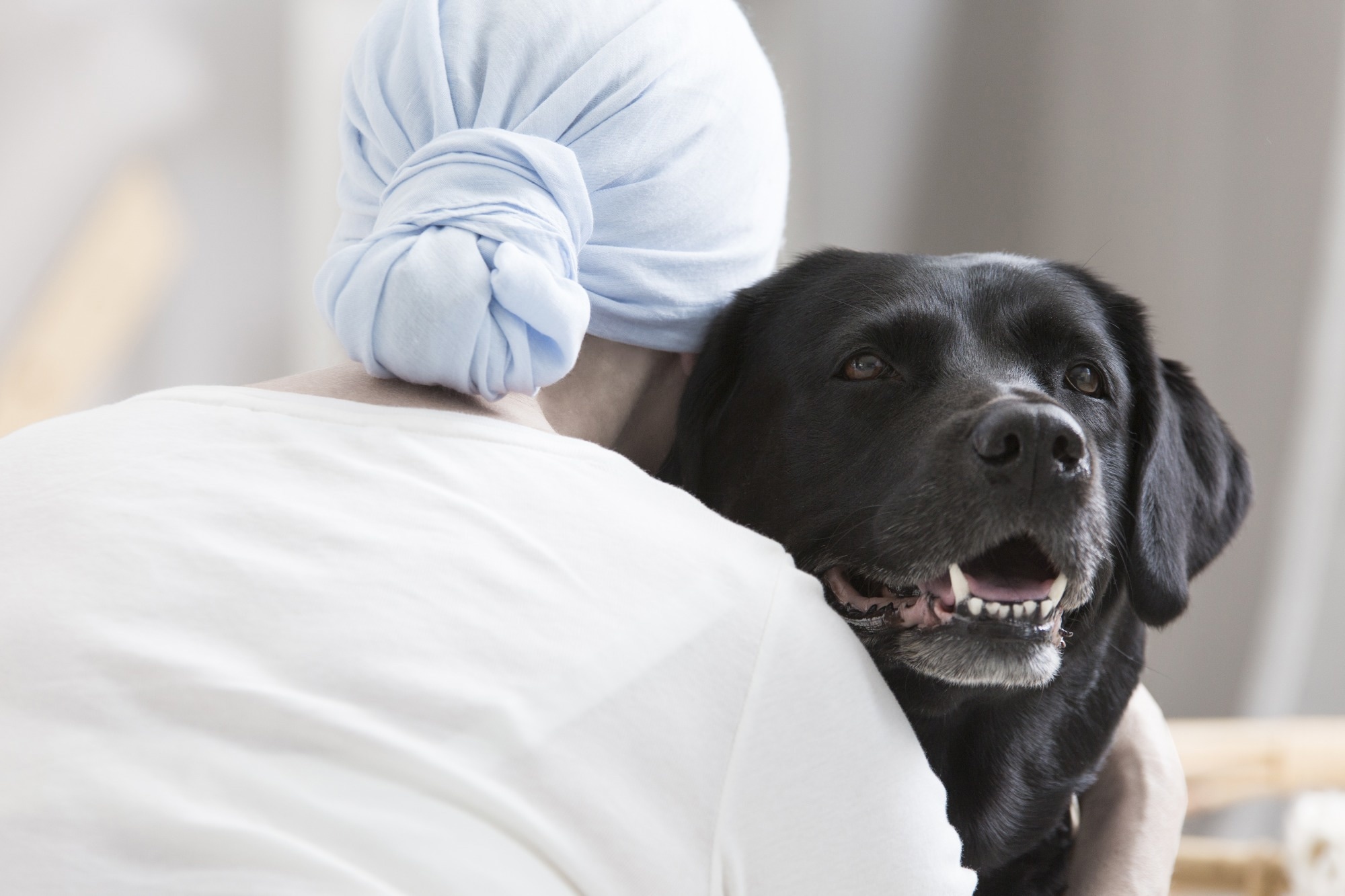 Image Credit: Ground Picture / Shutterstock.com
Clinical applications and populations
AAT is increasingly utilized in hospitals, long-term care facilities, and mental health centers to support vulnerable populations. In pediatric oncology and intensive care, AAT is a potentially feasible adjunctive method that may reduce fear and anxiety during acute treatments.8
For example, a dental study revealed that 97% of children participating in AAT did not cry during their procedure.8 Among older adults, especially those in memory care, increased motivation for self-care and communication capabilities have been observed.2
The role of AAT is expanding into the management of chronic diseases and palliative care, where this method is being integrated to address end-of-life symptoms like dyspnea and pain perception.3
Limitations and challenges
Existing studies on AAT are characterized by numerous limitations, including variability in study design and a lack of standardized interventions.3 Many systematic reviews report low or very low quality of evidence due to small sample sizes, heterogeneity, and risk of bias.6
Clinical implementation must account for potential allergy risks and zoonotic disease transmission.9
Consequently, the United States Centers for Disease Control and Prevention (CDC) has introduced numerous protocols for AAT interventions, including strict hand hygiene and restricting animals from sterile environments such as operating rooms and pharmacies. Animals may act as reservoirs for zoonotic pathogens or antibiotic-resistant organisms, requiring strict infection control measures in healthcare settings.9
Importantly, AAT is not universally suitable, as patients with phobias or aggressive behaviors must be excluded to ensure both human and animal welfare.4
Future directions
Advancing current applications of AAT requires the development of theoretically informed, manualized protocols that clearly define the roles of the animal, handler, and therapist.5 Larger and adequately powered randomized controlled trials are needed to establish definitive causality and optimize intervention parameters like frequency and duration.6 Future research should also prioritize standardization of outcome measures, clearer separation of AAT from AAA, and broader human-animal interaction, and long-term follow-up to better assess sustained therapeutic effects.1,4,6
References
- Arsovski, D. (2024). The Role of Animal Assisted Therapy in the Rehabilitation of Mental Health Disorders: A Systematic Literature Review. Perspectives on Integrative Medicine 3(3); 142–151. DOI: 10.56986/pim.2024.10.003. https://integrmed.org/journal/view.php?doi=10.56986/pim.2024.10.003
- Koukourikos, K., Georgopoulou, A., Kourkouta, L., & Tsaloglidou, A. (2019). Benefits of animal assisted therapy in mental health. International Journal of Caring Sciences 12(3); 1898-1905. http://www.internationaljournalofcaringsciences.org/docs/64_koukorikos_review_12_3.pdf
- Palomino-Lázaro, L., Rueda-Extremera, M., & Cantero-García, M. (2024). Animal-Assisted Therapy in palliative care: a scoping review. Frontiers in Psychology 15. DOI: 10.3389/fpsyg.2024.1478264. https://www.frontiersin.org/journals/psychology/articles/10.3389/fpsyg.2024.1478264/full
- International Association of Human-Animal Interaction Organizations. (2018). IAHAIO definitions for animal assisted intervention and guidelines for wellness of animals involved. IAHAIO. https://iahaio.org/wp/wp-content/uploads/2018/04/iahaio_wp_updated-2018-final.pdf
- Sim, S. Q., Liu, Z., Wu, Z., et al. (2025). Canine-assisted therapy in reducing stress and anxiety levels of university students: systematic review and meta-analysis of randomized controlled trials. BMC Complementary Medicine and Therapies 25(1). DOI: 10.1186/s12906-025-04955-2. https://pmc.ncbi.nlm.nih.gov/articles/PMC12341270/
- Tyssedal, M. K., Johnsen, E., Brønstad, A., & Skrede, S. (2023). Dog-assisted interventions for adults diagnosed with schizophrenia and related disorders: a systematic review. Frontiers in Psychiatry 14. DOI: 10.3389/fpsyt.2023.1192075. https://www.frontiersin.org/journals/psychiatry/articles/10.3389/fpsyt.2023.1192075/full
- Beetz, A., Uvnäs-Moberg, K., Julius, H., & Kotrschal, K. (2012). Psychosocial and Psychophysiological Effects of Human-Animal Interactions: The Possible Role of Oxytocin. Frontiers in Psychology 3. DOI: 10.3389/fpsyg.2012.00234. https://www.frontiersin.org/journals/psychology/articles/10.3389/fpsyg.2012.00234/full
- Brandão, C., Sampaio, M., Sousa-Gomes, V., et al. (2025). Effects of Animal-Assisted Therapy for Anxiety Reduction in Children and Adolescents: A Systematic Review. Journal of Clinical Medicine 14(1); 287. DOI: 10.3390/jcm14010287. https://www.mdpi.com/2077-0383/14/1/287
- Centers for Disease Control and Prevention. (2024, January 8). Animals in healthcare facilities. CDC Infection Control. https://www.cdc.gov/infection-control/hcp/environmental-control/animals-in-healthcare-facilities.html. Accessed 07 April 2026
Further Reading
Last Updated: Apr 26, 2026