Do Beginners in Strength Training Need Protein? Check Your Daily Diet Before Buying|佐藤大祐|CLOUD GYM認定トレーナー

When you start strength training, you begin to notice protein advertisements and people carrying shakers. You might find yourself wondering, “Should I be drinking it too?”
I also receive consultations from clients about protein. When that happens, I first check their daily diet. I believe that if you are getting enough protein from your meals, there is no need to force yourself to drink it.
On the other hand, when you are busy and find it difficult to prepare proper meals, it can be a convenient option to supplement your intake. Before deciding whether to drink it, let’s think about what you are using it for.
By reading this article, you will understand the role of protein and how to decide whether to incorporate it based on your daily diet.
Protein is a food to supplement protein intake
The first thing I want to convey is that “protein is not a magic potion.” I think of it as a means to supplement protein, rather than expecting it to transform your body into your ideal just by drinking it.
Protein products include whey and casein derived from milk, and soy derived from soybeans. According to materials from the Japan Sport Council, the amount of protein and carbohydrates varies by product, and they may also contain vitamins and minerals [1].
In other words, commercial products are not necessarily “powder containing only protein.” You should check the contents rather than choosing based solely on the impression of the packaging.
Materials from the U.S. National Institutes of Health (NIH) also state that while protein products can supplement protein as needed, supplements are not a substitute for a healthy diet [2].
Review your daily diet before buying
What did you eat for breakfast? Did you have a main dish like meat or fish for lunch? Is your diet skewed only toward dinner? First, let’s look back at the content and amount of your daily meals.
Before deciding to “drink it because I’m doing strength training,” check how much you are getting from your meals. I personally value that order of operations.
The Ministry of Agriculture, Forestry and Fisheries introduces main dishes such as meat, fish, eggs, and soy dishes as foods that primarily provide protein [3]. However, just seeing that there is a main dish does not mean you can conclude that you are meeting your required amount.
The required amount varies depending on age, physique, exercise content, and health condition. If you don’t know if you are getting enough, you can also try keeping a food record or taking photos to have a registered dietitian or similar professional check it for you.
If you are supplementing with food, chicken breast and fish are also options
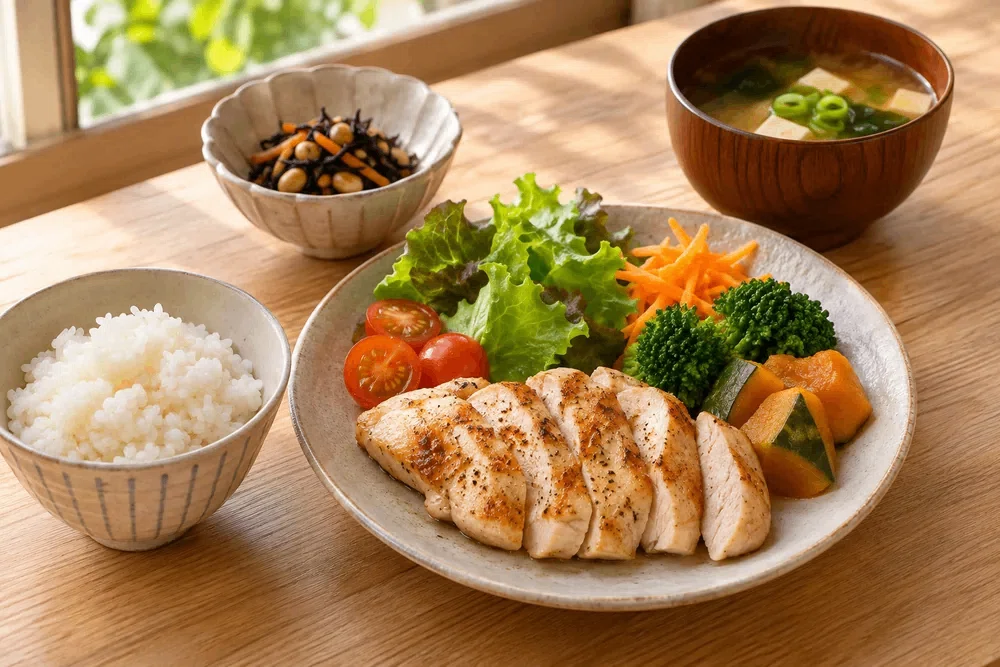
In my actual coaching, I routinely suggest chicken breast and fish. Before buying protein, I sometimes consider whether they can be incorporated as regular side dishes.
For example, combine grilled fish with a dinner that tends to consist only of rice and soup. Use chicken breast cooked on the weekend for weekday side dishes. Such ingenuity can be considered as a way to supplement through meals.
You don’t have to stick to the same ingredients every time. Eggs and soy products are also options for main dishes [3]. Please choose according to ease of purchase, cooking effort, and your preferences.
I also want to avoid cutting out rice and vegetables entirely just because you are conscious of protein. The Ministry of Agriculture, Forestry and Fisheries’ Dietary Balance Guide shows a way of thinking that combines staple foods, side dishes, main dishes, milk and dairy products, and fruits in a balanced manner [3].
When you are busy, have a way to supplement easily
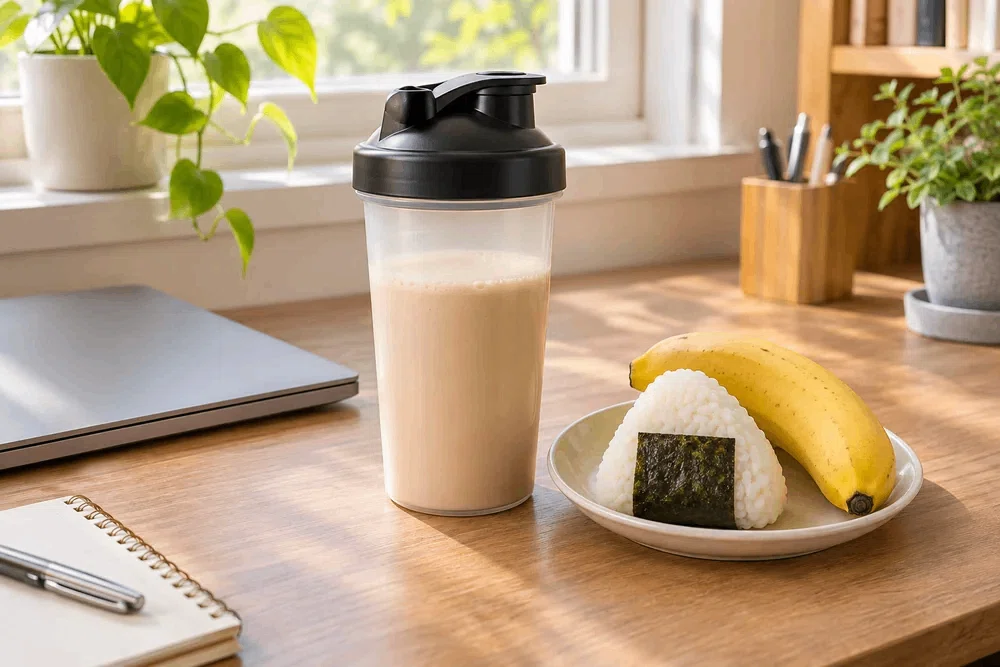
When work piles up and I don’t have the energy to prepare side dishes, and I look back at my meals and realize there are few protein-rich foods, I also consider using protein powder as an option to supplement.
There are products that are easy to prepare and portable. However, rather than deciding that ‘this is all I will have for meals on busy days,’ try to think about how to use it to supplement what is missing.
When buying, check the actual amount of protein and energy per serving, as well as the ingredients. The Consumer Affairs Agency also provides guidance on how to use nutrition labeling when choosing food [4].
The total nutrition of the drink will change depending on whether you make it with water or milk, etc. Please consider not only the powder’s label but also the foods you combine it with.
If you have specific instructions regarding protein intake due to medical treatment, etc., prioritize those instructions, do not add it on your own judgment, and consult a medical professional. You also need to be careful about allergens contained in the ingredients.
Clarify the reason for supplementing rather than just drinking it
If you are getting enough from your meals, you don’t have to force yourself to add protein. If you are busy and find it hard to supplement, you can take advantage of its convenience. I personally think both are natural choices.
First, look back at today’s meals and see what seems to be lacking and if there is anything you can change in your diet.
Don’t panic and think, ‘I started strength training, so I have to buy it.’ Instead, think about whether there are situations in your daily life where it is necessary. Based on that, choose a method that is easy for you to continue.
References
[1] Japan Institute of Sports Sciences, High Performance Sport Center, ‘Protein Supplements’
https://www.jpnsport.go.jp/hpsc/study/sports_nutrition/grouping/tabid/1497/Default.aspx
[2] National Institutes of Health (NIH) Office of Dietary Supplements, ‘Dietary Supplements for Exercise and Athletic Performance — Fact Sheet for Consumers’
https://ods.od.nih.gov/factsheets/ExerciseAndAthleticPerformance-Consumer/
[3] Ministry of Agriculture, Forestry and Fisheries, ‘Understanding “What” and “How Much” Through 5 Food Groups’
https://www.maff.go.jp/j/syokuiku/minna_navi/about/group.html
[4] Consumer Affairs Agency, ‘[For Consumers] On the Use of Nutrition Labeling’
https://www.caa.go.jp/policies/policy/food_labeling/nutrient_declearation/consumers/