Do muscles shrink if you take a 3-week break from strength training? Not significantly in young men|マッチョラボ|研究で答える筋トレ

“I’ve been so busy with work that I realized I’ve skipped strength training for 3 weeks. Have the muscles I worked so hard to build already wasted away?” “Do I have to start all over again from scratch?” Are you feeling anxious like that?
To give you the conclusion first, in studies of young men just starting to train who took a 3-week break from strength training, neither muscle thickness nor the weight they could lift decreased significantly.However, that does not mean nothing changes. Body composition monitor readings, muscle composition, and endurance were already shifting, and the longer the break, the more strength will decline.
In a study of 15 young men with no exercise experience, even in the group that did bench presses for 6 weeks and then took a full 3-week break, there was no significant decrease in the thickness of the chest and triceps muscles or the weight they could lift for a single repetition when measured after the break. In a study of 21 American football players around 16 years old who took a 3-week break, squat weight went from 120.8 kg to 118.1 kg, and the thickness of the front thigh muscle went from 2.71 cm to 2.68 cm, with neither showing a significant difference. On the other hand, the body composition monitor readings for those same players showed a decrease in lean body mass of 1.3 kg and an increase in fat mass of 1.1 kg.
In this article, I will explain what can and cannot be said based on research, in the order of: the results of the 3-week break studies, how to read body composition monitor numbers, what changes first in 2–3 weeks, differences from studies with fixed legs, how strength returns upon resuming and muscle memory, what happens if the break is longer, and how to resume training. By the time you finish reading, you should understand how to process the 3 weeks you took off and how you should resume.
The video “What happens if you skip strength training for 3 weeks” also explains the same content with diagrams.
Even if you take a 3-week break from strength training, thickness and weight do not decrease significantly
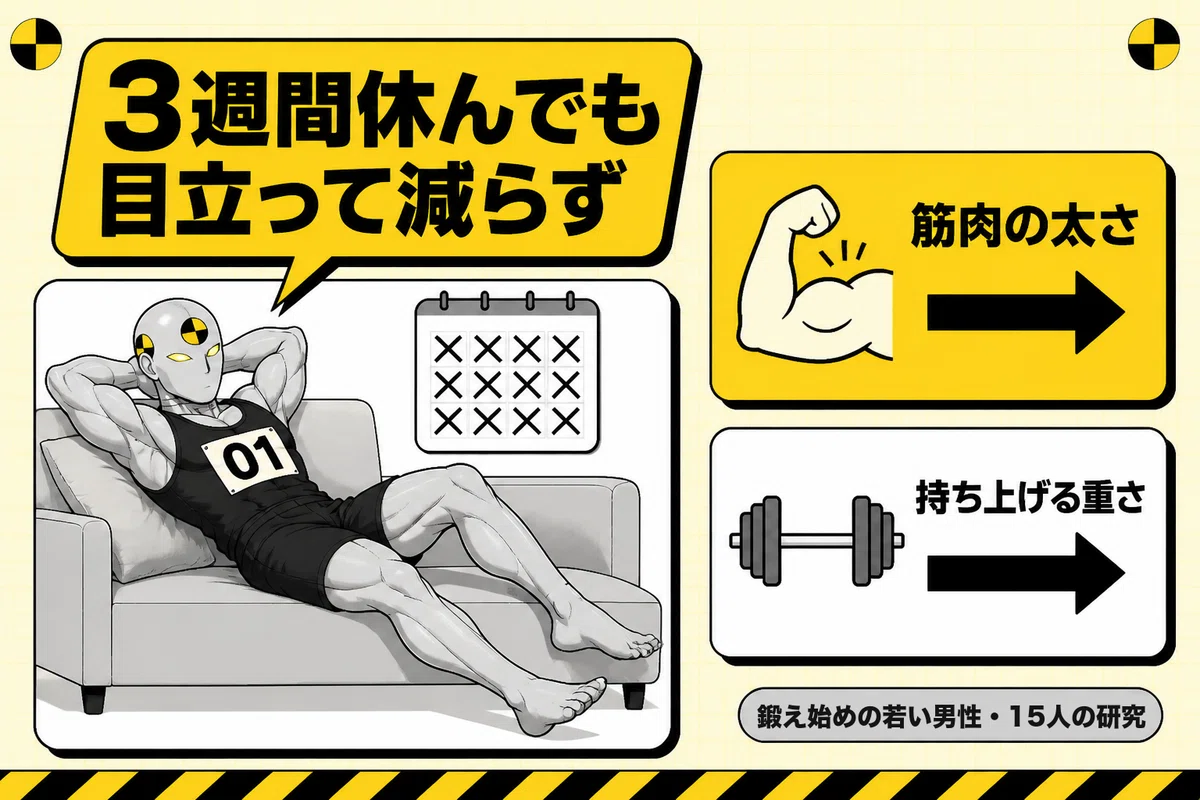
There are two studies on taking a 3-week break from strength training, and in both, muscle thickness and the weight that could be lifted did not decrease significantly.However, the subjects were young men just starting to train and athletes around 16 years old. It cannot be said that this applies to everyone.
In the study of young men just starting to train, neither thickness nor weight decreased significantly
There is a study where 15 young men with no exercise experience began high-load bench press training (Ogasawara 2011). They were divided into a group that continued for 15 weeks without a break and a group that trained for 6 weeks, took a 3-week break, and then resumed for 6 weeks. The cross-sectional area of the chest and triceps muscles was measured with an MRI, and the weight they could lift for a single repetition was also measured.
For the first 6 weeks, both groups increased in weight and thickness in the same way. And for the group that took a break, even when measured after the 3-week break, neither the muscle cross-sectional area nor the weight they could lift for a single repetition had decreased significantly. The gains at the end of the 15 weeks were about the same for both groups.
However, I have only confirmed this study through its abstract. The abstract does not state the specific numbers of what percentage it increased or decreased, how many of the 15 people were in the break group, or how many times a week they trained. What can be said is “not significantly decreased” rather than “not decreased at all.”
21 athletes around 16 years old also showed no change in muscle thickness
Another study is of 21 male junior American football players in Germany (aged 15–18) (Gavanda 2020). Regarding strength training history, 13 had less than 1 year of experience, and 8 had 1 year or more. After continuing full-body strength training 3 times a week for 12 weeks, they stopped both strength training and football practice for 3 weeks.
Comparing before and after the 3-week break, the weight they could lift for a single repetition in squats went from 120.8 kg to 118.1 kg, and for bench press, it went from 83.3 kg to 83.6 kg. The thickness of the front thigh muscle measured by ultrasound went from 2.71 cm to 2.68 cm, and the outer thigh went from 1.71 cm to 1.69 cm. None of these showed a significant difference. Jump height also went from 41.9 cm to 42.0 cm, showing no change.
Even after the 3-week break, every item remained higher than before they started strength training.
Studies on 3-week breaks for trained individuals or middle-aged and older people have not been found
The two studies so far are of young men 6 weeks into training (bench press) and athletes around 16 years old. As far as I have searched, I have not found any studies on adults or middle-aged and older people who have been training for years taking a 3-week break. I have also not found any studies on taking a break from bodyweight strength training like push-ups or squats.
Therefore, I cannot say “nothing changes even if you skip for 3 weeks” or “it’s safe to skip.”As we will see in the next chapter, this is because there are numbers that were shifting in areas other than thickness and weight.
Body composition monitor readings can shift when you take a 3-week break
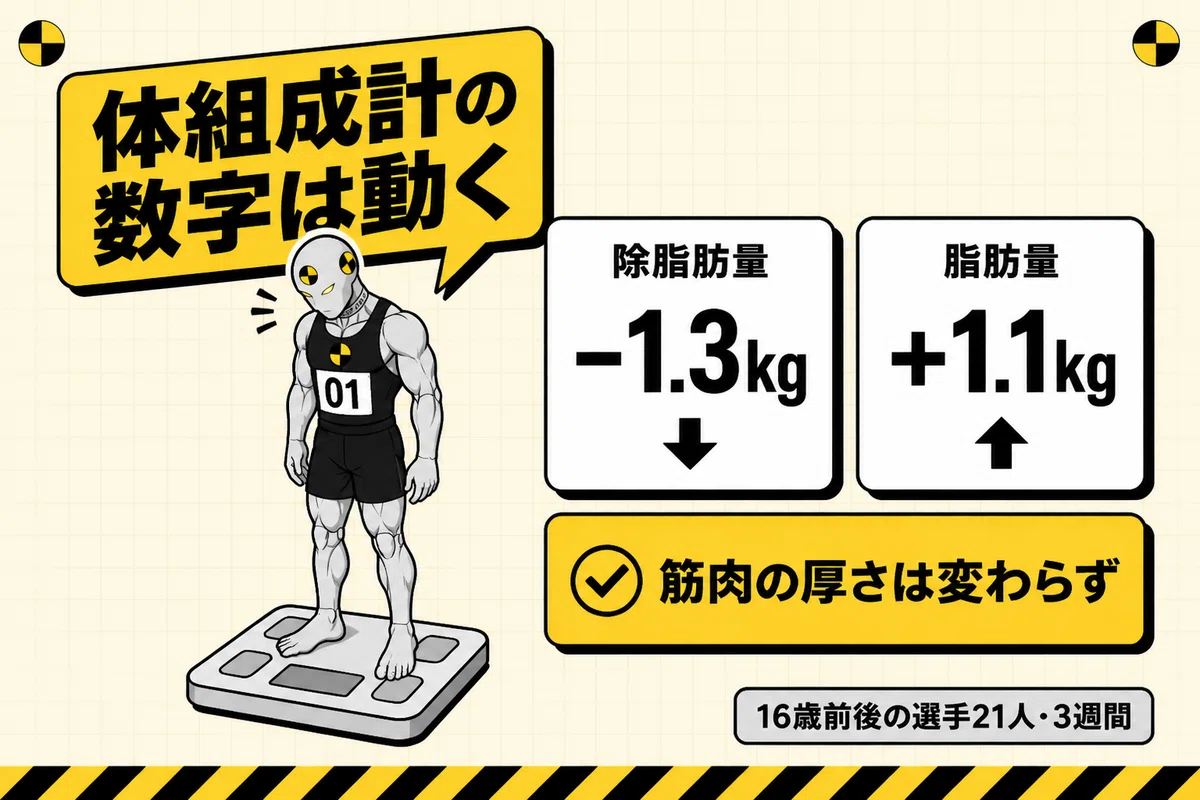
Even if muscle thickness has not changed, body composition monitor readings can shift.In the study of the athletes around 16 years old mentioned above, what changed significantly were the body composition monitor readings.
Lean body mass decreased by 1.3 kg and fat mass increased by 1.1 kg
When 21 of the same athletes were measured using a body composition monitor, their lean body mass decreased by 1.3 kg from 69.1 kg to 67.8 kg over 3 weeks, and their fat mass increased by 1.1 kg from 15.2 kg to 16.3 kg (Gavanda 2020). Both are significant changes. Body weight went from 84.2 kg to 84.1 kg, showing almost no change.
If you only looked at the scale, it would be a 3-week period where it looks like nothing happened.
Lean body mass is not just muscle mass
However, from these results, we cannot say that “muscle mass drops by 1.3 kg in 3 weeks.” Lean body mass is a value from a body composition monitor that uses electrical impedance, and it includes not only muscle but also water and other components. When the muscle thickness of the same individuals was measured using ultrasound, it had not changed.
The numbers on a body composition monitor and muscle thickness do not always move in the same way. Also, these are the results for athletes around 16 years old who stopped both strength training and practice, and their diet was not controlled. It does not mean that an adult will gain 1 kg of fat if they take a 3-week break.
Fast-twitch fibers and endurance are the first to change after 2-3 weeks of rest
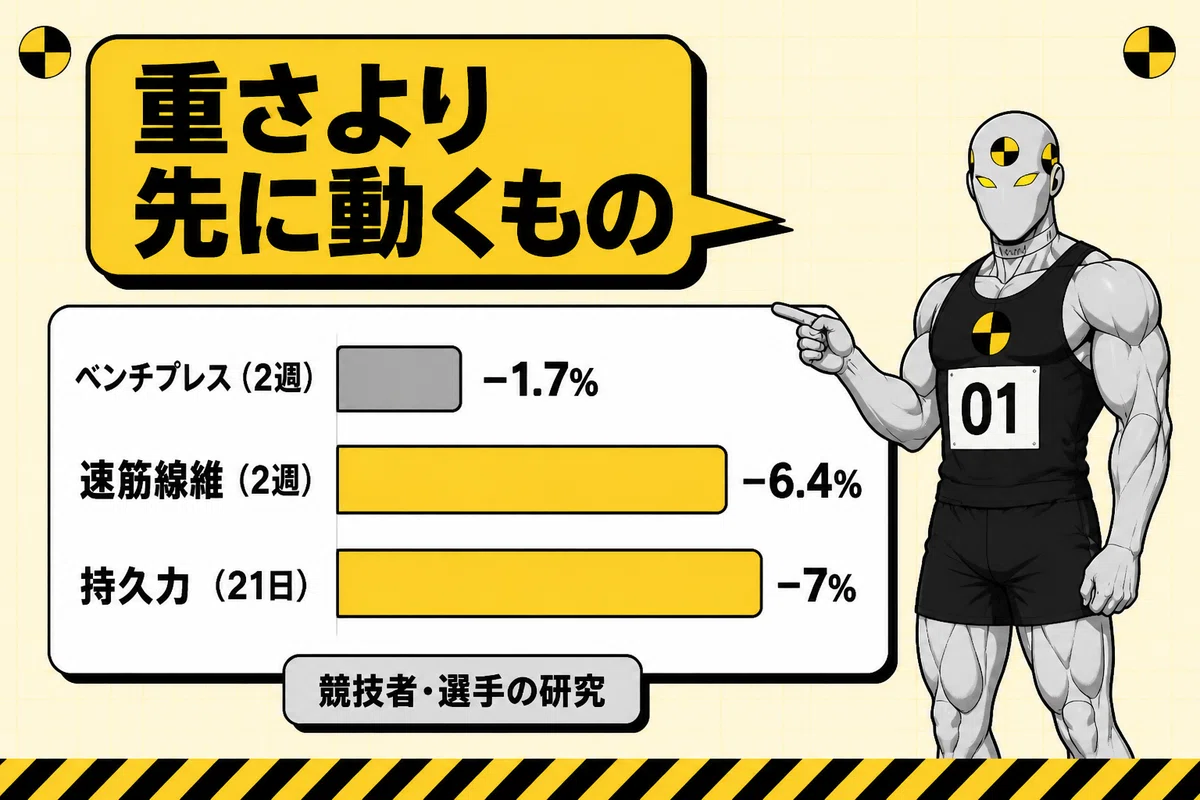
What tends to change first after a 2-3 week break is the thickness of muscle fibers responsible for fast movements and endurance, rather than the amount of weight that can be lifted. However, all of these are studies on competitors and athletes.
Fast-twitch fibers became 6.4% thinner after a 2-week break
There is a study where 12 power athletes stopped strength training for 14 days (Hortobágyi 1993). Bench press performance dropped by 1.7% and squats by 0.9%, but neither was a significant change. This means the amount of weight they could lift remained almost unchanged.
On the other hand, the thickness of the muscle fibers responsible for fast movements (fast-twitch fibers) had decreased by 6.4%. The eccentric strength (the ability to resist during the lowering phase) of the knee extensor muscles decreased in all subjects, with an average drop of 12%. The internal composition is changing slightly before the weight capacity does.
However, 6.4% is a value measured from the cross-section of individual muscle fibers. It does not mean that the entire muscle mass drops by 6% in 2 weeks. I have only confirmed this study through its abstract, and the gender, age, and sport of the subjects are unknown. It has not been verified for beginners or middle-aged and older individuals.
In another study, 20 young men (with strength training experience) who had been doing strength training 4 times a week for 4 weeks took a 2-week break, and their leg press strength did not decrease (Hwang 2017).
Endurance metrics dropped by 7% in 21 days
In a study of 7 individuals who had been engaged in endurance training and then stopped, their endurance metric (VO2 max) dropped by 7% in the first 21 days (Coyle 1984). From day 56 onwards, it stabilized at a level 16% lower than the original. However, even after 84 days of stopping, it remained higher than that of 8 individuals who had never exercised.
This is a story about endurance athletes who were doing long, intense training. It does not mean that the endurance of someone who took a break from strength training will drop by 7% in 3 weeks.
Muscle strength is likely to be maintained for about 4 weeks
Review articles summarizing research also state that muscle strength is generally likely to be maintained for up to 4 weeks (Mujika & Padilla 2001). However, it is also noted that the eccentric strength of well-trained athletes or strength that was only recently acquired may drop significantly.
To summarize the body in the 3rd week: weight and muscle thickness remain almost the same, endurance begins to drop, and body composition monitor numbers may fluctuate (this summary phrasing is by Macho Lab).
Studies on muscle loss due to limb immobilization are different from taking a break from strength training
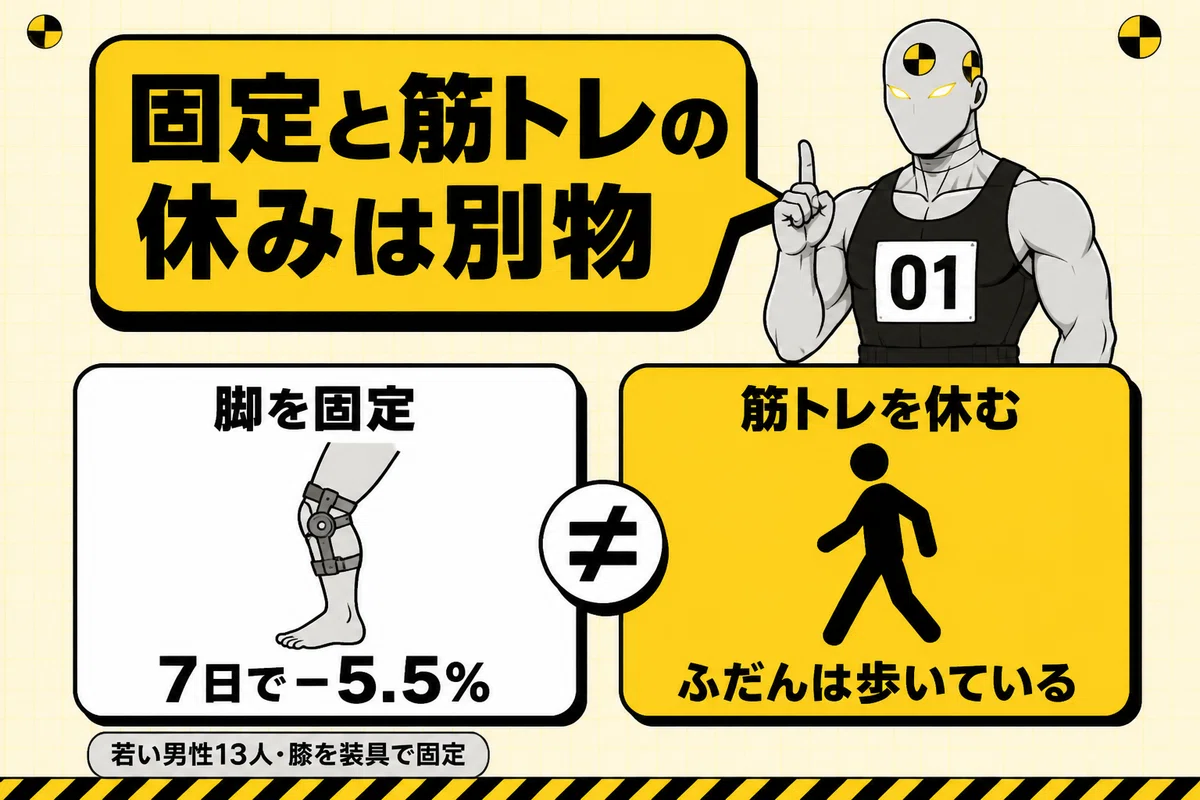
The figure that “muscles shrink by 5% in one week” comes from studies where legs were immobilized with braces. It does not apply to people who simply take a break from strength training.
Immobilizing the knee for 7 days reduced thigh muscle by 5.5%
There is a study (Kilroe 2020) where the knees of 13 healthy young men were immobilized with braces for 7 days. The thigh muscle volume of the immobilized leg decreased by 1.7% in 2 days and 5.5% in 7 days. In another study where the knees of young men were immobilized for 5 days, the cross-sectional area of the front thigh muscles decreased by 3.5% and muscle strength by 9% (Dirks 2014).
Even while taking a break from strength training, you still use your legs in daily life
However, this refers to a state where the leg is barely used. People in studies on 3-week breaks from strength training continue to walk and climb stairs in their daily lives. Immobilization and taking a break from strength training are different things.
Note that I could not find any studies that measured only the first week of stopping training. Also, cases involving hospitalization, being bedridden, or being unable to move due to illness are medical matters and are not covered in this article.
Muscles return upon resuming training, but muscle memory in humans is unclear
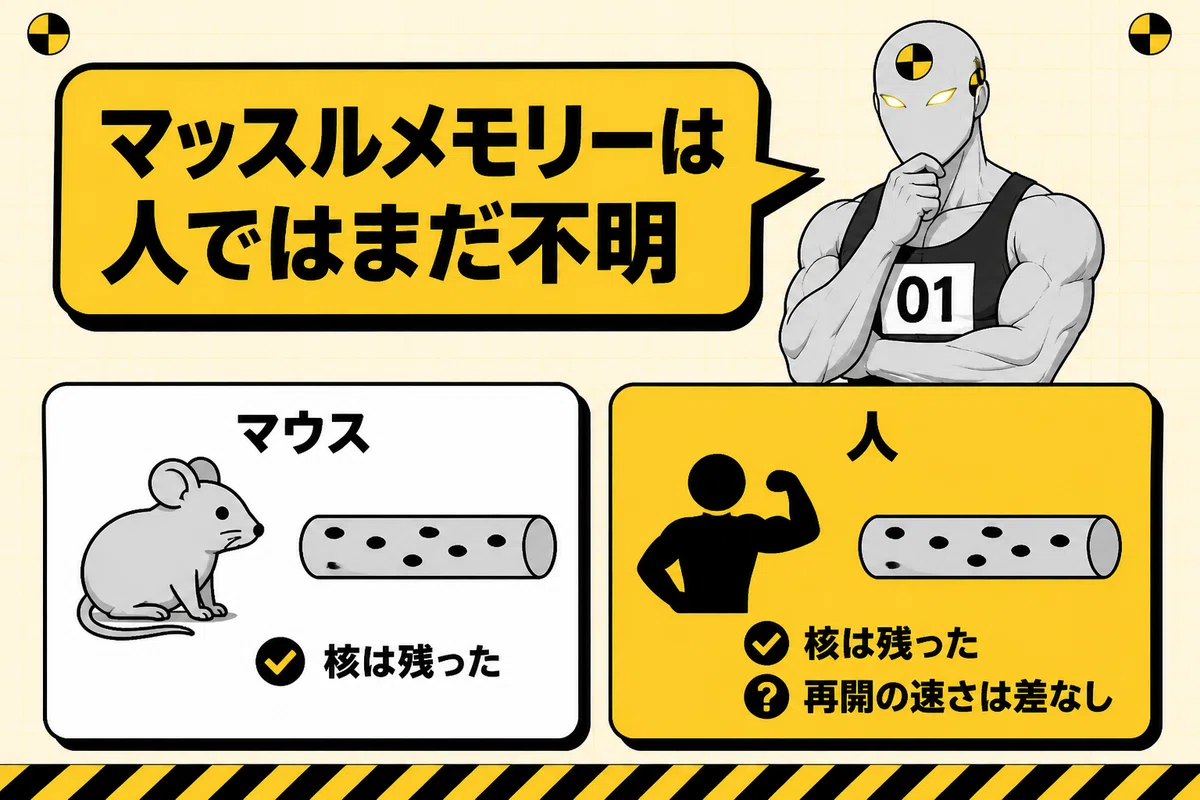
Young men who took a 3-week break regained muscle thickness at about the same rate as they did initially when they resumed. However, it cannot be said that they “instantly return due to muscle memory.” This is because it is not clear from human studies whether previously trained muscles grow faster upon resumption.
Young men grew thicker at about the same rate as the first 6 weeks
The young men who took a 3-week break, introduced at the beginning, saw their muscle cross-sectional area increase by about the same amount in the 6 weeks after resuming as they did in the first 6 weeks (Ogasawara 2011). The researchers concluded that a 3-week break does not hinder muscle adaptation.
Older men took 12 weeks off and returned to their original weight in less than 8 weeks
There are also studies on older people who took longer breaks. When 30 elderly men performed 12 weeks of strength training, their knee extension strength and power increased by 10–36% (Blocquiaux 2020). After taking the same 12 weeks off, they saw a 5–15% decrease.
Even so, it did not disappear completely, and within 8 weeks of resuming, their one-rep max returned to pre-break levels. Although shorter than the break period, it took nearly 8 weeks, so it did not return immediately. Please note that this was a study of men only, and since I am confirming this only from the abstract, the exact age figures are unknown. Also, note that this is not about a 3-week break.
The origin of muscle memory was a mouse study
Muscle memory is often cited as the reason for rapid recovery upon resumption. The origin of this was a study on mice (Bruusgaard 2010).
In this study, part of the muscle in front of the shin was surgically removed to concentrate the load on the adjacent muscle, causing it to grow. As a result, the number of muscle nuclei increased first (from 41 to 63 per mm), and the thickness increased afterward (cross-sectional area increased by 35%). Next, when the nerves were cut to immobilize the muscle, the cross-sectional area shrank to 40% of its peak thickness in 14 days, but the number of nuclei did not significantly decrease. The nuclei remained for at least 3 months after the nerves were cut.
This is an animal experiment where the load was concentrated by surgery and the nerves were cut to immobilize the muscle. It is quite different from humans taking a break from strength training.
Nuclei remain in humans too, but it is unknown if resumption becomes faster
There are also studies conducted on humans. 12 untrained men and women trained one arm for 10 weeks, took 16 weeks off, and then trained both arms for 10 weeks (Cumming 2024). Even though the muscle fibers thinned during the break, the muscle nuclei remained. However, there was no difference in the rate of thickening upon resumption between the previously trained arm and the untrained arm.
The same is true for studies verified on legs. 9 men and 10 women trained one leg for 10 weeks, took 20 weeks off, and resumed with both legs for 5 weeks (Psilander 2019). After a 20-week break, muscle thickness returned to its original state, but some strength remained. The increase in thickness and strength after resumption was the same for the previously trained leg and the untrained leg. However, in this study, the number of nuclei did not increase in the first 10 weeks, and the researchers wrote that they could not strictly verify the concept of muscle memory.
There are studies with conflicting results. In one study, men with no prior strength training experience trained for 7 weeks, took a 7-week break, and then resumed for 7 weeks (Seaborne 2018). Their leg lean mass increased by 6.5% during training, returned to baseline levels during the break, and increased by 12.4% from the start after resuming. Some genetic markers for muscle also remained during the break. However, only 7 people were analyzed, and the weights handled upon resumption were significantly heavier. The difference in growth also includes the difference in weight.
What has been confirmed in humans is that nuclei and genetic markers remain even after a break.Whether this makes resuming faster is not yet clear.
The longer the break, the greater the loss in muscle strength
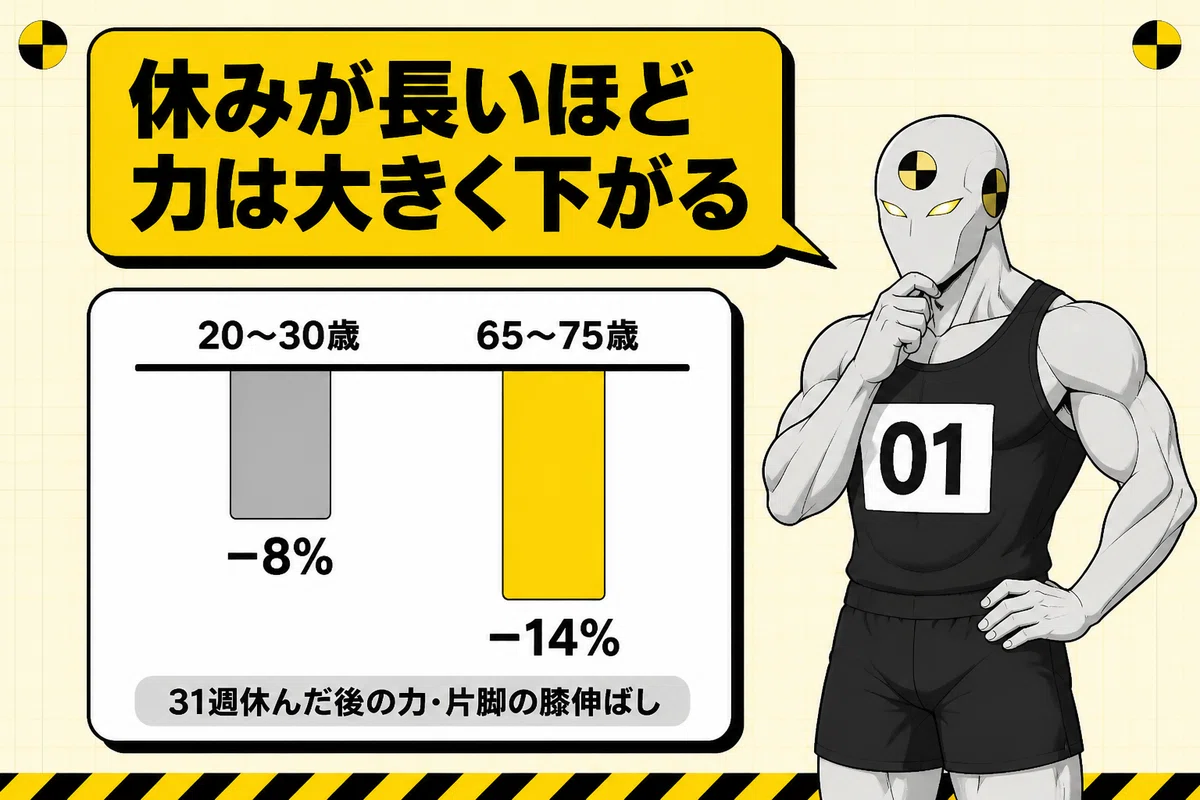
If you stop strength training, your strength will decrease, and the longer the break, the greater the decrease.People who return after a 3-week break and those who never return after a break are two different cases.
A summary of 103 studies also showed that longer breaks led to greater decreases
In an analysis summarizing 103 studies on stopping strength training, muscle strength decreased in all aspects upon cessation (Bosquet 2013). Furthermore, the longer the break, the greater the decrease. Maximum strength and power decreased more in people who do not usually exercise than in those who exercise as a hobby.
However, since this was confirmed only through abstracts, specific figures for each period, such as ‘what percentage after 3 weeks,’ are unknown.
People over 65 experience a greater decline in muscle strength
In the same analysis, the decline was greater in people over 65 (Bosquet 2013).
There are also studies directly comparing young people and the elderly. 18 people aged 20-30 and 23 people aged 65-75 performed single-leg knee extensions 3 times a week for 9 weeks, followed by a 31-week break (Lemmer 2000). The decrease in strength after the 31-week break was 8% for the young group and 14% for the elderly group. However, the decline mainly occurred between 12 and 31 weeks, and strength was maintained similarly in both groups up to the 12-week break.
An analysis summarizing 6 studies on elderly people also showed that the decrease in muscle size was not significant during breaks of 12-24 weeks, but became significantly smaller during breaks of 31-52 weeks (Grgic 2022). All of these were studies measuring the muscles in the front of the thigh.
Repeating 3-week breaks and resuming results in similar levels after 24 weeks
What if you return after a break? In a study where 14 young men performed bench presses 3 times a week, a group that continued for 24 weeks without a break was compared to a group that repeated ‘6 weeks of training and 3 weeks of rest’ three times (Ogasawara 2013). Muscle thickness and strength gains after 24 weeks were about the same in both groups.
The important thing is that these people properly resumed training every time they took a 3-week break. This does not mean that taking a break increases muscle mass. The total gain over 24 weeks was about the same.
When resuming strength training, increase the load gradually
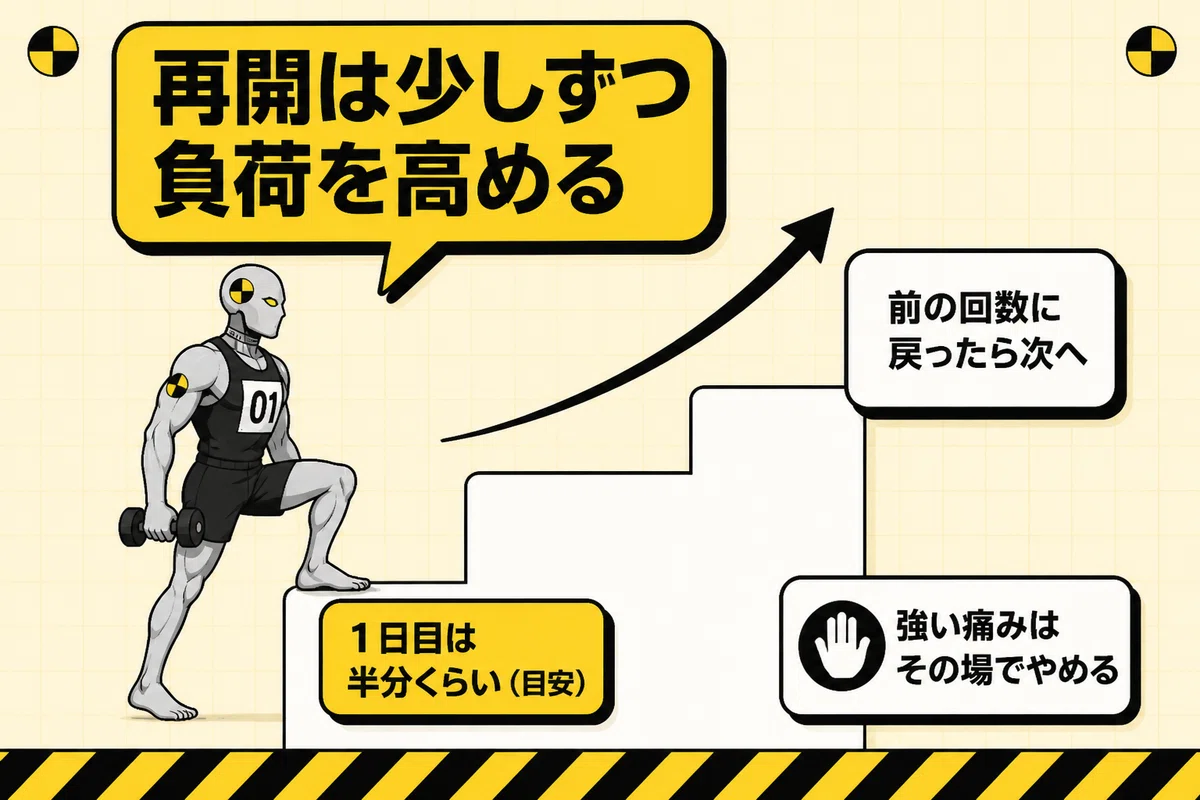
When resuming, it is recommended to start light and gradually increase the load.Since no studies or official standards comparing how to return after a break were found, the wording of national guidelines written for general strength training is used as a basis.
National guidelines state to increase the load gradually
The Ministry of Health, Labour and Welfare’s exercise guidelines (2023) state that it is important to perform strength training at a load higher than the daily life level and to increase the load gradually. The load can be adjusted by weight or number of repetitions. The guidelines state that the target for strength training is 2-3 days a week, and that taking days to rest the muscles is equally important. It also states that muscles can be trained regardless of age.
However, this guide does not have rules such as ‘what percentage of the previous load to use when resuming.’
On the first day of resuming, about half of the pre-break load is a good guideline
So, here are some guidelines from Macho Lab (these are not based on research or official figures). On the first day of resuming, try to do about half the volume you were doing before the break, and finish with some energy left over. It should feel like you haven’t quite done enough.
Once you return to your previous rep counts, move on to the next stage. You can use the general strength training guideline from the American College of Sports Medicine (ACSM 2009), which suggests increasing the load once you can perform 1-2 more reps than your target. This is not a standard specifically designed for returning from a break.
The effect of reducing muscle soreness lasted for about six months in arm studies
In a study where 35 male students performed two sessions of arm-lowering exercises, the effect of reduced muscle soreness in the second session lasted for at least 6 months for most items and disappeared between 9 and 12 months (Nosaka 2001).
However, this was a study on intense arm-lowering exercises and did not investigate the case of taking a 3-week break. It cannot be said that you will not experience muscle soreness after a 3-week break.
Stop immediately if you feel strong pain in your joints or muscles
If you feel strong pain in your joints or muscles, stop immediately. If the pain is severe, consult a medical institution.The Ministry of Health, Labour and Welfare’s Exercise Guide (2023) states that if you feel any abnormalities such as strong pain in your joints or muscles during exercise, you should stop exercising immediately.
What can and cannot be said about studies on taking a break from strength training

I will divide the content covered so far into what can be said based on research and what cannot yet be said.
What can be said
-
The longer the break, the greater the loss in strength. The loss is even greater for those over 65 (summary of 103 studies)
-
In young men just starting to train, neither muscle thickness nor maximum weight decreased significantly after a 3-week break (study of 15 people, bench press)
-
What tends to decline first in 2-3 weeks is not weight, but fast-twitch fiber thickness and endurance (studies on athletes and competitors)
-
Even in humans, muscle nuclei and genetic markers remain after a break
-
When resuming, increase the load gradually (Ministry of Health, Labour and Welfare guide)
What cannot yet be said
-
Nothing changes even if you slack off for 3 weeks, so you can rest easy
-
Muscle memory will return everything to normal in an instant
-
If you slack off, you lose 5% of your muscle in 1 week (figures from studies where legs were immobilized)
-
Taking a break increases muscle mass
-
What happens if people who have trained for years or middle-aged and older people take a 3-week break (no studies found)
Common questions about taking a break from strength training
Q. Do you lose muscle even if you take just a 1-week break?
As far as I could find, there are no studies that measured only the first week of stopping training. The figure of a ‘5.5% decrease in 7 days’ comes from a study where the knee was immobilized with a brace (Kilroe 2020), and it does not apply to cases where you simply take a break from strength training.
Q. The muscle mass on my body composition monitor decreased. Does that mean I lost muscle?
Not necessarily. In a study of athletes around 16 years old who took a 3-week break, their lean body mass on the body composition monitor decreased by 1.3 kg, but the muscle thickness measured by ultrasound did not change (Gavanda 2020). Lean body mass also includes water and other components.
Q. Because of muscle memory, do you get it back quickly even if you take a break?
We cannot go that far. It has been confirmed in humans that muscle nuclei remain after a break (Cumming 2024). However, the rate of muscle growth upon resuming training showed no difference between the side that had been trained previously and the side that had not.
Q. Is it the same for middle-aged and older people if it’s 3 weeks?
No studies were found on people who have trained for years or middle-aged and older people taking a 3-week break. What we do know is that the decline is greater in people over 65 (Bosquet 2013), and in a study comparing young people to those aged 65–75, both maintained strength equally up to a 12-week break (Lemmer 2000).
Q. Does taking a break increase muscle?
That cannot be said. In a group that took a 3-week break versus a group that continued without a break, the gains after 24 weeks were about the same (Ogasawara 2013). The group that took a break did not outperform the other.
Summary: If you take a 3-week break from strength training, ease back into it
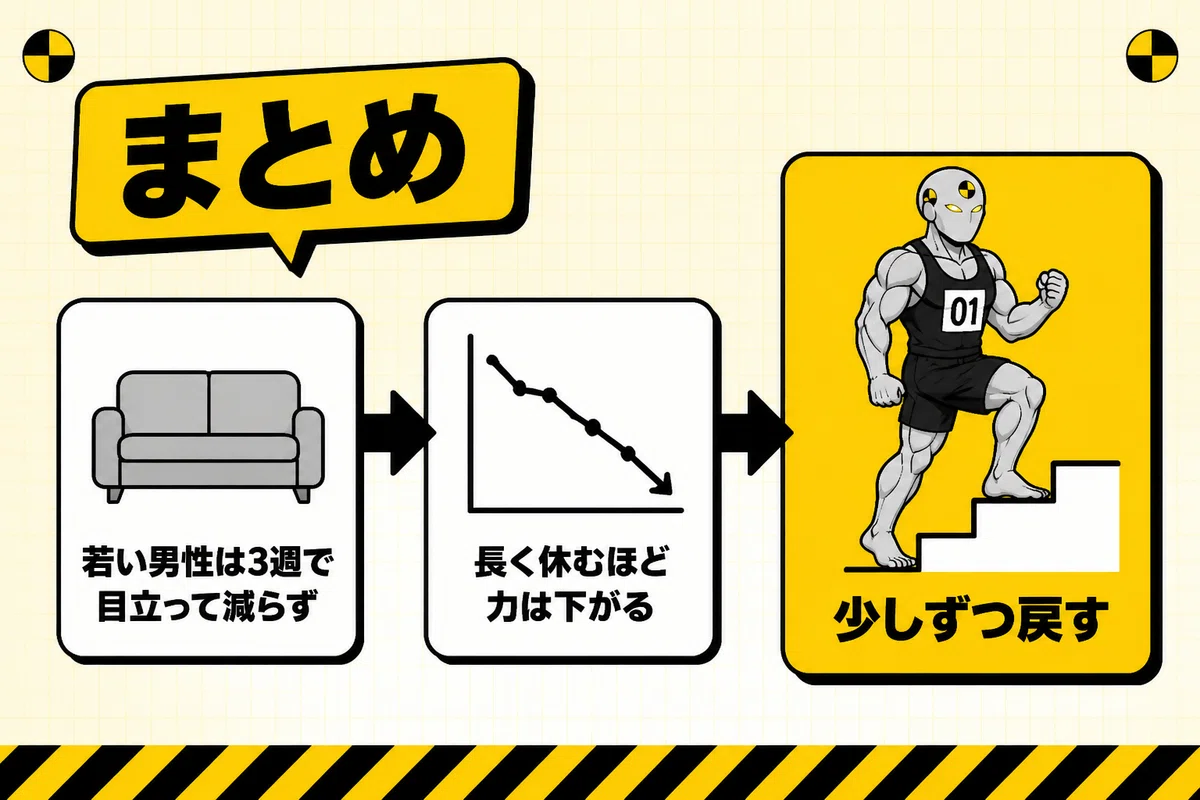
In a study of young men just starting to train who took a 3-week break, neither muscle thickness nor one-rep max strength decreased significantly. In a study of athletes around 16 years old, muscle thickness and squat weight also did not change. However, no studies were found confirming this for people who have trained for years or for middle-aged and older people.
On the other hand, the numbers on body composition monitors for those same athletes did fluctuate, a study of competitors who took a 2-week break showed that fast-twitch muscle fibers became thinner, and a study of endurance athletes showed that endurance decreased. Furthermore, the longer the break, the greater the loss in strength, and the decline is more pronounced in those over 65.
Muscle memory has been confirmed in humans to the extent that nuclei and genetic markers remain, but it is not yet clear whether it makes resuming training faster. If you have taken a 3-week break, restart with lighter weights and gradually increase the load. A guideline from Macho Lab is to start at about half of what you were doing before the break (this is not a research-based or official figure). If you feel strong pain, stop immediately.
Macho Lab YouTube & SNS
Macho Lab is a channel that verifies what happens if you do strength training ‘every day’ based on what research can tell us. If you don’t want to miss new videos, please subscribe to the Macho Lab YouTube channel.
Short videos are also posted on TikTok and Instagram.
If you found this article helpful, please let me know by clicking the Like (heart) button.
References
-
Ogasawara R, et al. (2011) Effects of periodic and continued resistance training on muscle CSA and strength in previously untrained men. Clin Physiol Funct Imaging 31(5):399-404. https://pubmed.ncbi.nlm.nih.gov/21771261/
-
Gavanda S, et al. (2020) Three Weeks of Detraining Does Not Decrease Muscle Thickness, Strength or Sport Performance in Adolescent Athletes. Int J Exerc Sci 13(6):633-644. https://pubmed.ncbi.nlm.nih.gov/32509134/
-
Hortobágyi T, et al. (1993) The effects of detraining on power athletes. Med Sci Sports Exerc 25(8):929-935. https://pubmed.ncbi.nlm.nih.gov/8371654/
-
Hwang PS, et al. (2017) J Strength Cond Res 31(4):869-881. https://pubmed.ncbi.nlm.nih.gov/28328712/
-
Coyle EF, et al. (1984) Time course of loss of adaptations after stopping prolonged intense endurance training. J Appl Physiol Respir Environ Exerc Physiol 57(6):1857-1864. https://pubmed.ncbi.nlm.nih.gov/6511559/
-
Mujika I, Padilla S (2001) Med Sci Sports Exerc 33(8):1297-1303. https://pubmed.ncbi.nlm.nih.gov/11474330/
-
Kilroe SP, et al. (2020) Temporal Muscle-specific Disuse Atrophy during One Week of Leg Immobilization. Med Sci Sports Exerc 52(4):944-954. https://pubmed.ncbi.nlm.nih.gov/31688656/
-
Dirks ML, et al. (2014) Acta Physiol 210(3):628-641. https://pubmed.ncbi.nlm.nih.gov/24251881/
-
Blocquiaux S, et al. (2020) The effect of resistance training, detraining and retraining on muscle strength and power, myofibre size, satellite cells and myonuclei in older men. Exp Gerontol 133:110860. https://pubmed.ncbi.nlm.nih.gov/32017951/
-
Bruusgaard JC, et al. (2010) Myonuclei acquired by overload exercise precede hypertrophy and are not lost on detraining. Proc Natl Acad Sci U S A 107(34):15111-15116. https://pubmed.ncbi.nlm.nih.gov/20713720/
-
Cumming KT, et al. (2024) J Physiol 602(17):4171-4193. https://pubmed.ncbi.nlm.nih.gov/39159314/
-
Psilander N, et al. (2019) Effects of training, detraining, and retraining on strength, hypertrophy, and myonuclear number in human skeletal muscle. J Appl Physiol 126(6):1636-1645. https://pubmed.ncbi.nlm.nih.gov/30991013/
-
Seaborne RA, et al. (2018) Human Skeletal Muscle Possesses an Epigenetic Memory of Hypertrophy. Sci Rep 8(1):1898. https://pubmed.ncbi.nlm.nih.gov/29382913/
-
Bosquet L, et al. (2013) Effect of training cessation on muscular performance: a meta-analysis. Scand J Med Sci Sports 23(3):e140-e149. https://pubmed.ncbi.nlm.nih.gov/23347054/
-
Lemmer JT, et al. (2000) Med Sci Sports Exerc 32(8):1505-1512. https://pubmed.ncbi.nlm.nih.gov/10949019/
-
Grgic J (2022) Int J Environ Res Public Health 19(21):14048. https://pubmed.ncbi.nlm.nih.gov/36360927/
-
Ogasawara R, et al. (2013) Comparison of muscle hypertrophy following 6-month of continuous and periodic strength training. Eur J Appl Physiol 113(4):975-985. https://pubmed.ncbi.nlm.nih.gov/23053130/
-
Nosaka K, et al. (2001) How long does the protective effect on eccentric exercise-induced muscle damage last? Med Sci Sports Exerc 33(9):1490-1495. https://pubmed.ncbi.nlm.nih.gov/11528337/
-
American College of Sports Medicine (2009) Position stand. Progression models in resistance training for healthy adults. Med Sci Sports Exerc 41(3):687-708. https://pubmed.ncbi.nlm.nih.gov/19204579/
-
Ministry of Health, Labour and Welfare (2023) Physical Activity and Exercise Guide for Health Promotion 2023. https://www.mhlw.go.jp/content/001194020.pdf
*This article provides general information and is not medical advice. Please consult a medical institution if you are experiencing severe pain or when resuming exercise after being unable to move due to illness or injury. *Gavanda 2020, Seaborne 2018, Bruusgaard 2010, and Grgic 2022 were reviewed in full, and the Ministry of Health, Labour and Welfare guide was reviewed in the original text. Other studies (Ogasawara 2011, Hortobágyi 1993, Hwang 2017, Coyle 1984, Mujika & Padilla 2001, Kilroe 2020, Dirks 2014, Blocquiaux 2020, Cumming 2024, Psilander 2019, Bosquet 2013, Lemmer 2000, Ogasawara 2013, Nosaka 2001, ACSM 2009) were reviewed based on abstracts only. The bibliography and links for ACSM 2009 were confirmed in the first research memo. Bruusgaard 2010 is a study on mice (some experiments were on rats). Many of the studies introduced were conducted on young men or athletes and did not investigate cases where individuals who have trained for years or middle-aged and older adults take a 3-week break.