Strength training for women: How to strike the right balance between cardio and resistance workouts



Walk into any gym today and you will notice a shift. The treadmill banks, once almost exclusively occupied by women, now share the floor with weight racks where more and more women are pulling, pressing, and squatting their way to stronger, leaner bodies. It is a cultural correction that is long overdue and the science backs it up completely.For years, a persistent myth held that lifting weights would make women “bulky.” That myth has been thoroughly dismantled. What resistance training actually does is reshape the body: building lean muscle tissue, elevating resting metabolic rate, and creating the firm, defined look that most women are actually chasing when they say they want to “tone up.” Toning, in physiological terms, is simply having enough muscle beneath a lower level of body fat for definition to show. Cardio alone cannot get you there. That said, cardio is far from redundant. The question is never really cardio or weights, it is always about finding the right ratio. Rahull Raghuvanshii Managing Director, Jetts Fitness India shares insights.
9 Feb 2026 | 17:24
How has your idea of beauty changed over time?
Why Resistance Training Comes FirstMuscle is metabolically expensive tissue. The more of it you carry, the more calories your body burns at rest. A woman who builds meaningful muscle through consistent resistance training will burn more energy across the entire day, not just during her workout. This is the fundamental advantage weights hold over steady-state cardio for body composition.Compound movements form the backbone of an effective programme. Squats, deadlifts, hip thrusts, bench presses, rows, and overhead presses recruit large muscle groups simultaneously, driving both strength gains and caloric expenditure. For most women, training three to four days a week with progressive overload, gradually adding weight, reps, or difficulty over time, is sufficient to see meaningful change within eight to twelve weeks.Progressive overload is the non-negotiable element here. Your body adapts quickly, and if the stimulus does not increase, neither does the result. Keep a training log. Track your lifts. Add weight when you can.
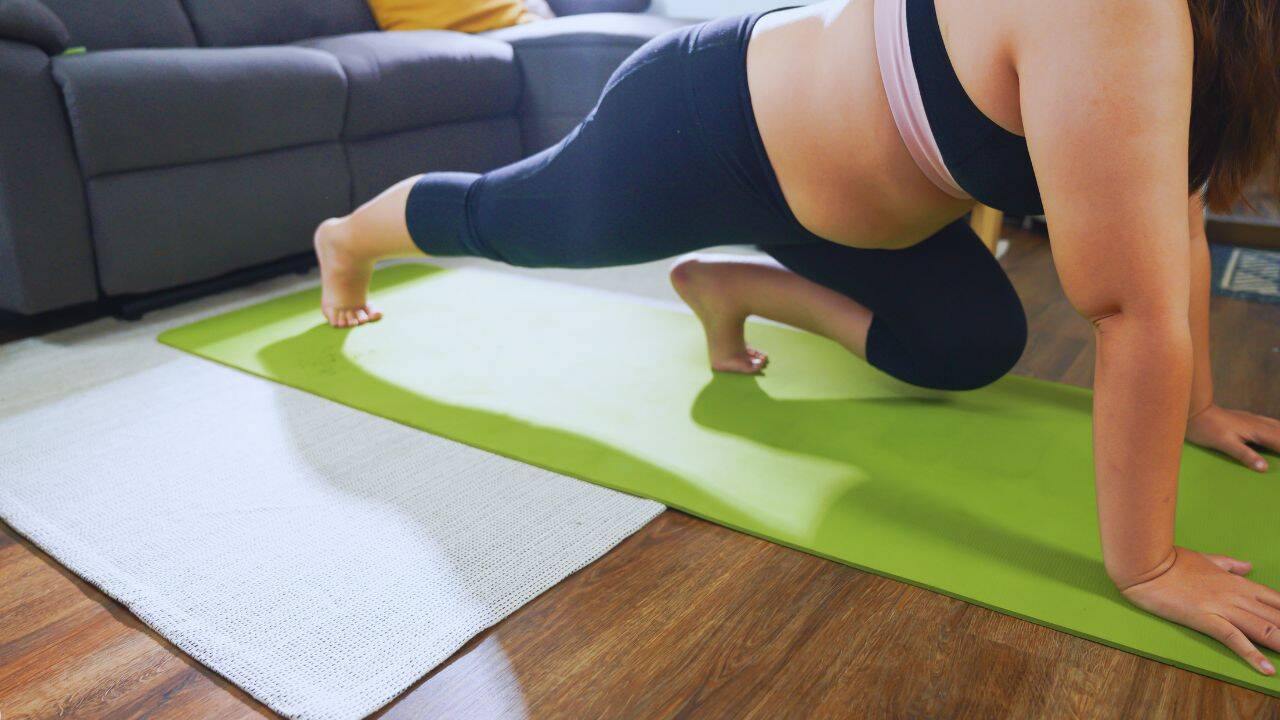
A woman’s exercise routine should be a healthy combination (Canva)
The Role of CardioCardiovascular training remains a cornerstone of general health; heart function, lung capacity, mood regulation, and recovery all benefit from it. For fat loss, cardio creates an additional caloric deficit, which helps reveal the muscle you are building underneath.The trap many women fall into is doing too much cardio at the expense of recovery and muscle retention. Long daily sessions of steady-state work can elevate cortisol, impair muscle repair, and leave you chronically fatigued. The sweet spot for most women is two to three cardio sessions per week, ranging from 20 to 45 minutes, depending on goals and fitness levels.High-intensity interval training (HIIT) offers a particularly efficient option, with shorter sessions that elevate post-exercise oxygen consumption and keep the metabolism elevated for hours after training ends. But intensity has a cost. If you are lifting heavy three or four times a week, three HIIT sessions on top of that is a recipe for burnout. Balance is everything.For women who want structured programming that blends both worlds intelligently, formats like Hyrox and Les Mills have surged in popularity and for good reason.Hyrox is a global fitness race that combines running with eight functional workout stations – sled pushes, wall balls, rowing, and ski ergs among them. It is an ideal model for women who want athletic performance alongside physique goals, demanding both cardiovascular endurance and functional strength in equal measure. Training for Hyrox naturally builds the hybrid fitness that makes everyday life feel easier.Les Mills, meanwhile, offers formats like BODYPUMP, a barbell class designed specifically around high repetitions with lighter loads, that has introduced countless women to resistance training in a group setting. It lowers the barrier to entry while still delivering genuine muscular stimulus.A sensible week for a woman focused on body composition might look like: three resistance sessions targeting the full body or split across push, pull, and lower days; two moderate cardio or HIIT sessions; and two days of active recovery or full rest. That is it. Simple, sustainable, and grounded in how the body actually works.The goal is not to exhaust yourself; it is to apply the right stress, recover from it, and come back stronger. Do that consistently, and the physique follows.