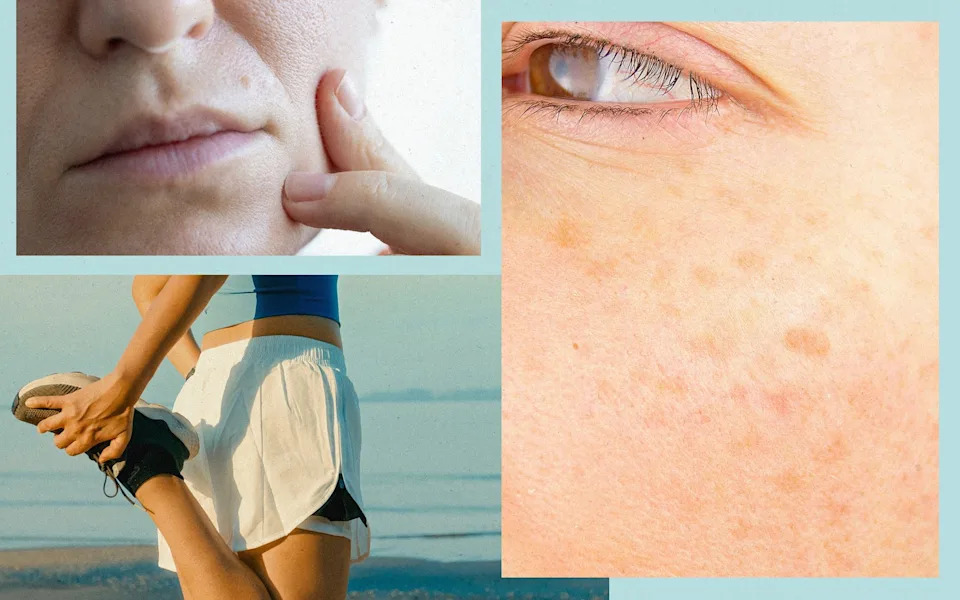
Never mind the LED masks, peptide serums and collagen supplements; we’ve always had – and always will have – exercise. However done, exercise boosts blood flow to the skin, bringing more oxygen and nutrients for a fresh-faced glow. But that’s not all. As science reveals more about the role of different exercises on skin, there are other significant benefits beyond renewed radiance.
Studies show that regular aerobic and load-bearing exercises can make skin thicker and more elastic, increasing the natural production of collagen and hyaluronic acid, explains consultant dermatologist Dr Emma Wedgeworth. Strength training “also reduces inflammation, which indirectly benefits conditions such as acne”,Or she continues. And – given how it preserves and improves bone density – “it is very plausible” that weighted exercises also keep the face well-supported throughout midlife and beyond. Springier skin atop stronger scaffolding? We’ll take it.
The good, however, can bring the bad. As Dr Wedgeworth notes, unwelcome visual effects of exercise are often from associated exposure, “particularly UV and pollution, which can accelerate photoaging” (when the skin ages prematurely). In addition, should it lead to significant drops in weight, or low body fat, exercise “can exacerbate facial volume loss,” she adds. But, back to the good news, with the right approach these negatives can be mitigated.
Whether you run, lift, swim or stretch, here we explain exactly what you need to know.
Runner’s face
(A leaner look, dehydration lines, pigment spots)

Outdoor running can result in a high cumulative UV dose, as well as exposure to wind and pollution
Contrary to popular belief, “there’s no good evidence that running per se causes sagging of the skin,” Dr Wedgeworth confirms. Indeed, as already noted, regular cardio – like running – can make skin more elastic. However, what may lead to a sunkenness synonymous with so-called “runner’s face” are the factors linked to the activity. “Outdoor running can result in a high cumulative UV dose, as well as exposure to wind and pollution. Combined with the lower body-fat percentage frequently seen in long-distance runners, this may unmask volume loss and wrinkling of the skin earlier,” the doctor explains. In-clinic, she also sees pigment spots, broken blood vessels and texture changes in those racking up high mileage.
Enter physical measures (like hats or visors and sunglasses) and UV protection that’s “high factor, broad-spectrum, and sweat resistant” – such as the L’Oréal Paris Revitalift Clinical SPF50.
Beyond protecting the skin, runners should support the body’s recovery processes, adds PT and nutrition coach, Sarah Campus. “Replenish with electrolytes [Artah’s Cellular Hydration, for instance] to help maintain skin hydration from within,” and prioritise protein, vitamin C, zinc and omega-3 fatty acids to support collagen production and tissue repair, she says. “Antioxidant-rich foods, such as berries, leafy greens and nuts, can also help counter some oxidative stress associated with intense training.”
Swimmer’s skin
(Dryness, sun damage, calming of inflammatory skin conditions)

Breaststroke and front crawl are good stroke styles to minimise prolonged water exposure
A combination of cardio and resistance exercise, swimming is one of the best low-impact fitness methods, although it’s not always skin-kind. “Chlorinated water can dry out the skin barrier,” Dr Wedgeworth reveals. As can salt water, except “people who suffer with inflammatory skin conditions such as eczema or psoriasis may find it beneficial”.
Either way, breaststroke and front crawl are good stroke styles to minimise prolonged water exposure, Campus offers. “To get the physical benefits while maintaining skin health, swim at a steady pace while keeping your face out of the water for at least part of the stroke cycle.” To offset sensitivity further, apply a moisturiser like the CeraVe Facial Moisturising Lotion beforehand. “Look for ingredients such as ceramides, niacinamide, glycerin and hyaluronic acid which help support barrier function,” Dr Wedgeworth says.
When swimming outdoors, “be mindful that water reflects sunlight which can increase UV exposure,” Campus flags. Here, take cover with a water-repellent mineral sunscreen, like the Cetaphil Daily Defence Cream SPF50. And after any swim, “wash with a pH-balanced, gentle skin cleanser” such as Dr Sam’s Flawless Cleanser, “then reapply moisturiser,” Dr Wedgeworth advises.
Strength trainer’s skin
(Thicker skin, strong structure, occasional sweat spots)

Facially, strength training can prevent the surrounding fat pads, muscles and skin from slumping
Strength training involves using weights or performing resistance exercises and is considered a key habit for healthy ageing – not least when it comes to bone preservation. Facially, if it can help slow a thinning bone structure, it can prevent the surrounding fat pads, muscles and skin from slumping. The best approach? “Research suggests that two-to-three strength sessions a week targeting the major muscle groups can stimulate meaningful changes in bone health when performed consistently,” Campus says.
This should strengthen the skin itself, too, via “improvements in dermal thickness and elasticity,” Dr Wedgeworth explains. In addition, resistance training “enhances insulin sensitivity”, she continues, which can read as a clearer, calmer complexion.
A caveat: “Post-workout skincare habits matter,” says Campus. “Sweat itself isn’t harmful, but leaving it on the skin for too long can potentially lead to irritation or breakouts.” Always use a gentle cleanser to remove residue without stripping the skin’s natural oils. Again, the refreshing Flawless Cleanser by Dr Sam’s is ideal.
Yogi’s glow
(Fewer flare-ups, improved hydration, corrected “tech neck”)

If the practices improve sleep quality, expect more efficient skin cell repair
Combining controlled breathing and mindful movement, low-impact mobility exercises like yoga and Pilates can dial down the stress response, which Dr Wedgeworth says should “translate to calmer, less reactive, healthier skin”. Furthermore, as skin renewal happens overnight, if the practices can improve sleep quality and duration, expect “more efficient repair, improved hydration and better control of inflammation,” the dermatologist adds.
The only hazard? A dirty mat, which if not regularly cleaned – and fully dried before being rolled up – could harbour skin-disruptive microbes.
And beyond the skin specifically, postural correction is another key visual gain accrued from this form of exercise. “Yoga and Pilates both strengthen the neck, shoulder and upper back muscles, which in turn encourages better head and spine alignment,” Campus tells us. “Over time, this can reduce the forward head position associated with ‘tech neck’ which may minimise the appearance of a double chin, creating a more lifted look through the jawline.” Consider us fully aligned.